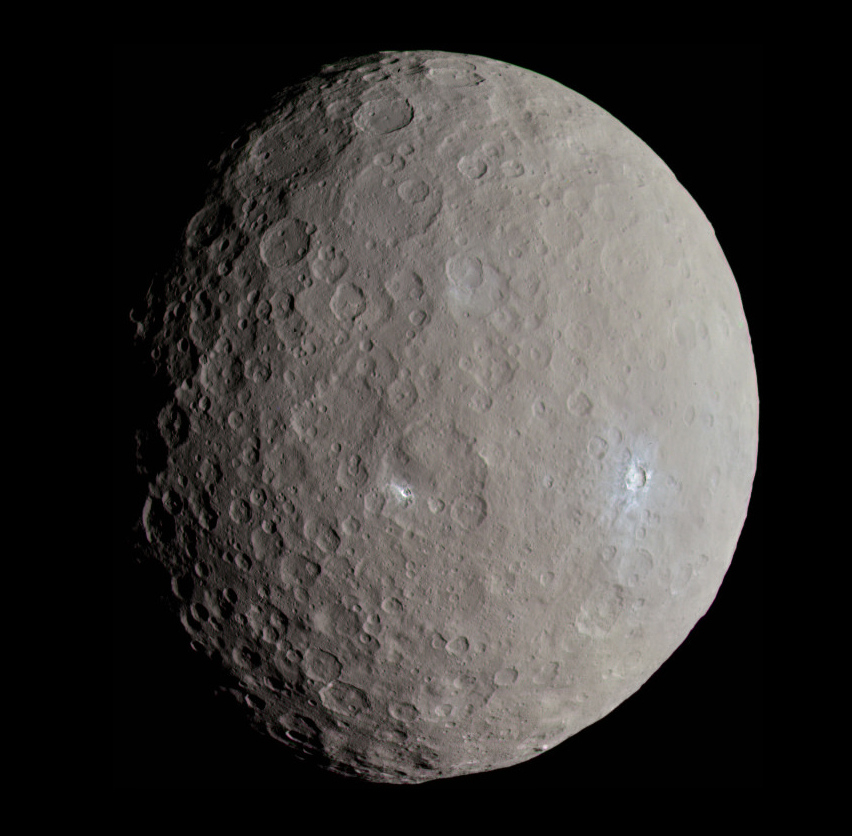
First discovery of asteroid Ceres
Palermo Astronomical Observatory, Sicily, Italy
Astronomy
Astrophysics
Space Exploration
4 min read
Updated By: History Editorial Network (HEN)
Published:
Updated:
On 01/01/1801, Italian astronomer Giuseppe Piazzi discovered Ceres while conducting a star-mapping project at the Palermo Astronomical Observatory in Sicily. During his observations, Piazzi noticed a faint object that appeared to shift position relative to the background stars over successive nights. Initially, he considered that it might be a comet, but its motion and lack of a visible tail suggested a different classification.
As further observations were made and analyzed by astronomers across Europe, the object was determined to follow a stable orbit between Mars and Jupiter. This region had long been predicted to contain a missing planet based on patterns in planetary distances. Instead, Ceres became the first known object in what is now called the asteroid belt. At the time of its discovery, it was classified as a planet, later reclassified as an asteroid, and in 2006 designated as a dwarf planet by the International Astronomical Union.
Ceres has a diameter of about 940 kilometers, making it the largest object in the asteroid belt. Its discovery marked the beginning of systematic identification of small bodies within the Solar System. Following Piazzi’s observation, additional objects such as Pallas, Juno, and Vesta were discovered in the same region, confirming that the space between Mars and Jupiter contained numerous rocky bodies rather than a single large planet.
Piazzi’s work demonstrated the importance of careful, repeated observation in detecting moving celestial objects. His discovery contributed to a broader understanding of the structure of the Solar System and introduced a new category of astronomical objects that would become a major focus of study in planetary science.
#mooflife
#MomentOfLife
#Ceres
#AsteroidDiscovery
#GiuseppePiazzi
#PlanetaryScience
#Astronomy
Primary Reference
Ceres (dwarf planet)

Explore the Life Moments of
 AI Twin