First Close Up Observations of a Comet
United States of America
Space Exploration
Astronomy
Comet Studies
4 min read
Updated By: History Editorial Network (HEN)
Published:
Updated:
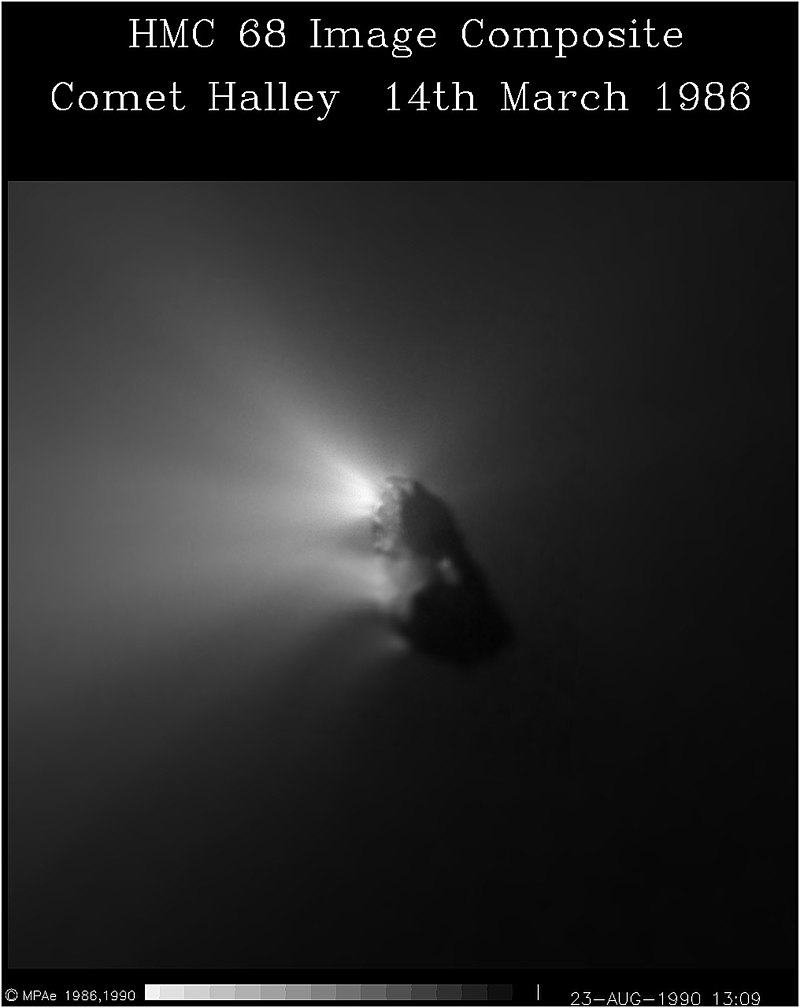
The Giotto mission, conducted by the European Space Agency (ESA), marked a pivotal advancement in cometary science by providing the first close-up observations of Halley's Comet. This mission involved a spacecraft that approached the comet at a distance of 596 kilometers, allowing scientists to gather unprecedented data about its structure and composition. Prior to this mission, knowledge about comets was largely based on telescopic observations, which limited the understanding of their physical characteristics and behavior. The close flyby enabled the collection of detailed images and measurements, revealing the comet's nucleus, its surface features, and the presence of various gases and dust particles. This data was crucial in enhancing the scientific community's understanding of cometary phenomena and their role in the solar system's evolution.
The impact of the Giotto mission extended beyond the immediate findings related to Halley's Comet. It provided a framework for future missions targeting other comets and celestial bodies, demonstrating the feasibility and importance of close encounters in space exploration. The mission also contributed to the development of new technologies and methodologies for spacecraft navigation and data collection in deep space. The insights gained from Giotto have influenced subsequent studies of comets, including missions to comets such as Comet 67P/Churyumov-Gerasimenko and Comet Wild 2. Overall, the Giotto mission not only advanced the understanding of Halley's Comet but also laid the groundwork for future explorations of these ancient celestial objects, which are considered time capsules of the early solar system.
#mooflife
#MomentOfLife
#GiottoMission
#Halley'sComet
#CometObservations
#SpaceExploration
#EuropeanSpaceAgency
Primary Reference
Giotto (spacecraft)

Explore the Life Moments of
 AI Twin