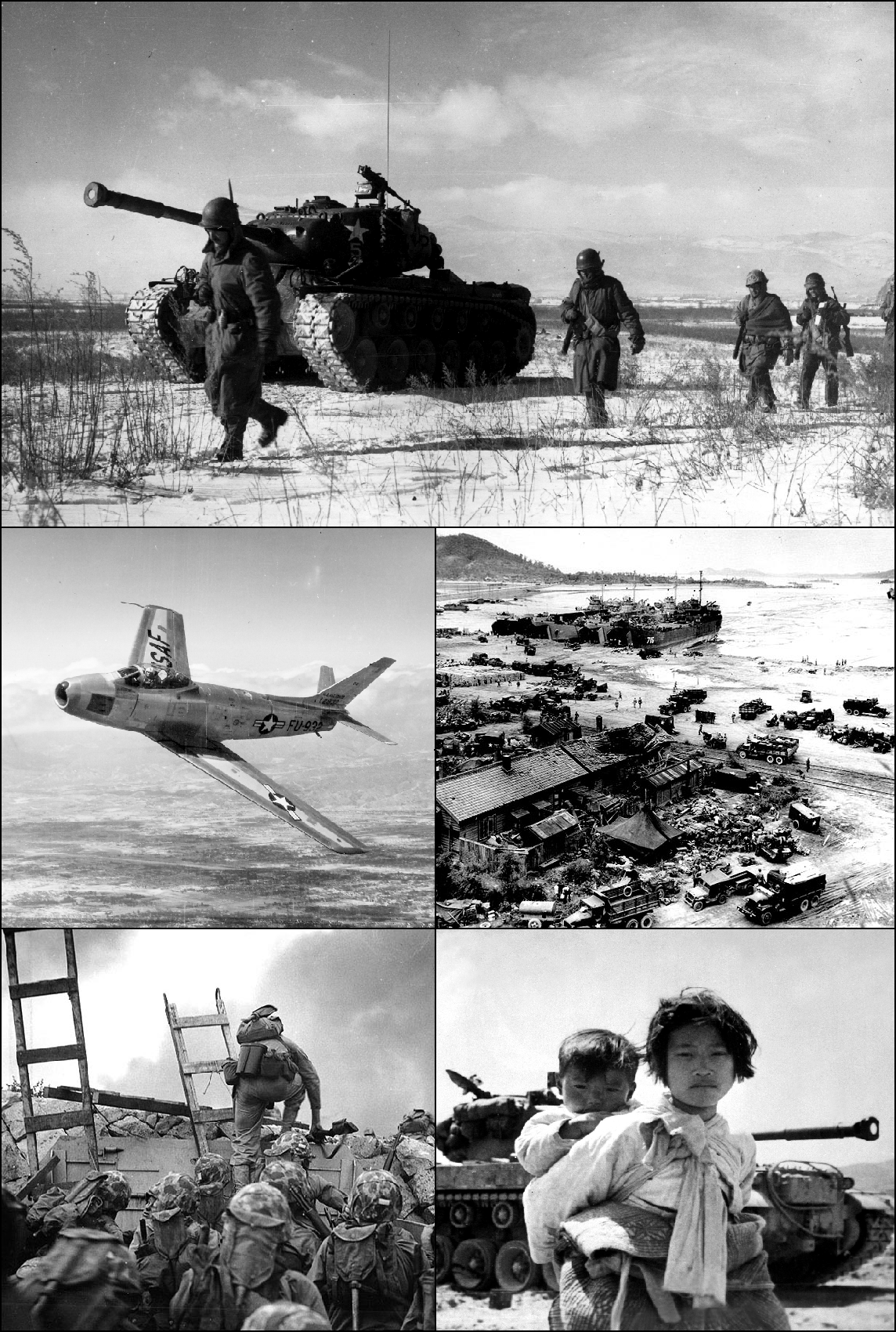
Korean War Breaks Out: Brief Overview
South Korea

Political
4 min read
Updated By: History Editorial Network (HEN)
Published:
The Korean War erupted between South Korea and North Korea after skirmishes along the border escalated into a full-scale conflict. The division of Korea following World War II into a Soviet-backed North and a US-backed South set the stage for the conflict. North Korea, under Kim Il-sung, sought to reunify the divided Korean peninsula by force, while South Korea, led by Syngman Rhee, aimed to defend its sovereignty.
The North Korean invasion of South Korea caught the international community by surprise, leading to an urgent response from the United Nations, which condemned the invasion and authorized military support for South Korea. The US, having strategic interests in the region, committed troops and resources to repel the North Korean advance.
The war was marked by significant battles such as the Inchon Landing and the Battle of Pusan Perimeter, where UN forces managed to turn the tide against the North Korean aggression. However, the conflict devolved into a brutal stalemate along the 38th parallel, resulting in heavy casualties on both sides.
The Korean War had far-reaching consequences, claiming the lives of millions of soldiers and civilians, and leaving the Korean peninsula in ruins. The war also heightened tensions between the US and the Soviet Union during the Cold War and shaped the geopolitical landscape of East Asia for decades to come.
Despite an armistice in 1953, the Korean War technically never ended, as a formal peace treaty was never signed. The demilitarized zone that now divides North and South Korea serves as a constant reminder of the unresolved conflict and the enduring division of the Korean people.
#KoreanWar #NorthKorea #SouthKorea #ColdWar #UN #38thParallel
Explore the Life Moments of
 AI Twin