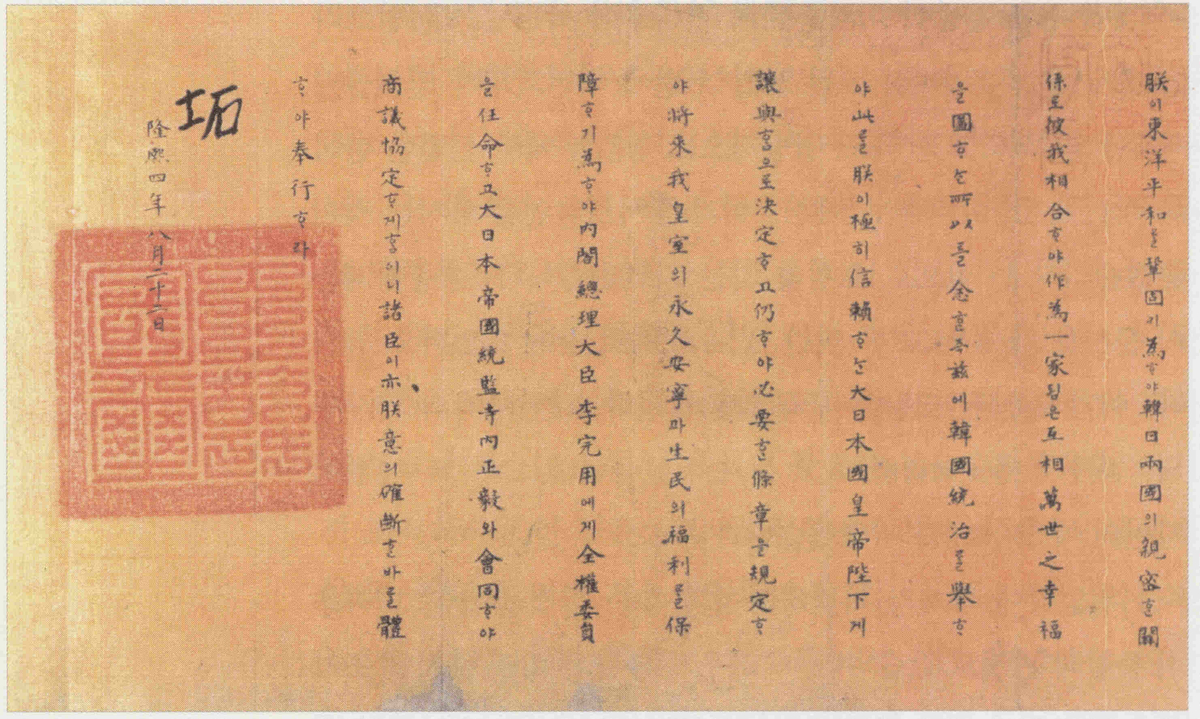
Japan-Korea Annexation Treaty: End of Korean Sovereignty
South Korea

Political
4 min read
Updated By: History Editorial Network (HEN)
Published:
In 1910, Japan and Korea reached a turning point as they signed the Japan-Korea Annexation Treaty. This marked the end of Korea's sovereignty as it effectively became a colony of Japan. The background of this event dates back to the late 19th century when Japan began to exert its influence over the Korean Peninsula.
The signing of the treaty had a profound impact on Korea, as it led to the loss of its independence and the imposition of Japanese rule. The Korean people faced cultural suppression, forced assimilation, and harsh living conditions under Japanese colonial rule. This period also saw the exploitation of Korea's resources and labor for the benefit of Japan.
The Japan-Korea Annexation Treaty further strained the relations between the two countries and fueled nationalist sentiments among Koreans. Resistance movements emerged, with many Koreans fighting to regain their independence and preserve their cultural identity. The effects of this treaty were long-lasting and continued to shape the historical narrative of both countries.
The Japan-Korea Annexation Treaty signing reshaped the trajectory of Korea's history, leaving a legacy of colonialism and struggle for independence. It underscores the importance of sovereignty and self-determination in the face of external aggression. The repercussions of this event resonate in the collective memory of South Korea and highlight the resilience of its people in the face of adversity.
#Japan #Korea #AnnexationTreaty #Sovereignty #Colonialism #Independence #Struggle

Explore the Life Moments of
 AI Twin