Communist Coup in Czechoslovakia
Slovakia
Political
6 min read
Updated By: History Editorial Network (HEN)
Published:
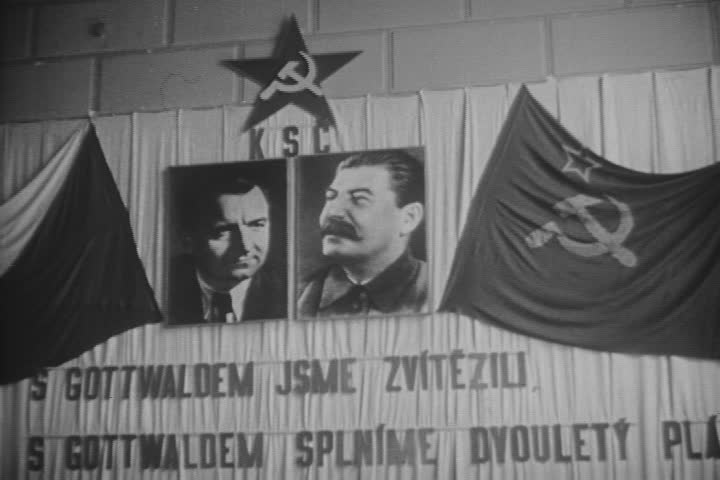
In the mid-20th century, a transformative event reshaped the political landscape of Czechoslovakia. The communist party, Klement Gottwald at its helm, orchestrated a strategic seizure of power. This political shift marked the culmination of months of growing communist influence within the country.
Prior to this pivotal moment, Czechoslovakia had a coalition government composed of various parties, including the Communist Party of Czechoslovakia (KSČ). The KSČ effectively utilized its growing support base and controlled key positions within the government and security apparatus. Amidst increasing political tension, several non-communist ministers resigned from their posts. This was meant to press for new elections, but instead, it played into the hands of the KSČ.
The departure of the non-communists provided the KSČ with the opportunity to capitalize on the political vacuum. Gottwald demanded the replacement of the vacated positions with communists or those sympathetic to the cause. President Edvard Beneš, under immense pressure and perhaps fearing civil unrest or external intervention, ultimately appointed the communist nominees. This power shift effectively ended the multi-party system that had been in place, establishing a single-party communist regime.
The resulting communist dominance brought about significant changes. The Czechoslovak government quickly aligned itself with the Soviet bloc, leading to centralized economic planning, nationalization of industries, and suppression of political dissidents. Media outlets and educational institutions soon came under state control, promoting communist ideologies.
Statistically, the employment in the industrial sector saw a reorganization, with the state assuming direct control of major enterprises and resources. Political purges and show trials became a common feature, intended to eliminate opposition and consolidate communist authority.
Internationally, this event indicated a broader shift within Eastern Europe, highlighting the increasing influence of the Soviet Union in the region during the early Cold War period. It set a precedent for similar coups and power shifts in neighboring countries, reinforcing the delineation between Eastern and Western Europe.
In summary, the communist takeover in Czechoslovakia was a significant turning point that led to a long-lasting impact on the political, economic, and social framework of the nation, intensifying the Cold War dynamics.
#CommunistCoup #Czechoslovakia #ColdWar #MoofLife
Explore the Life Moments of
 AI Twin