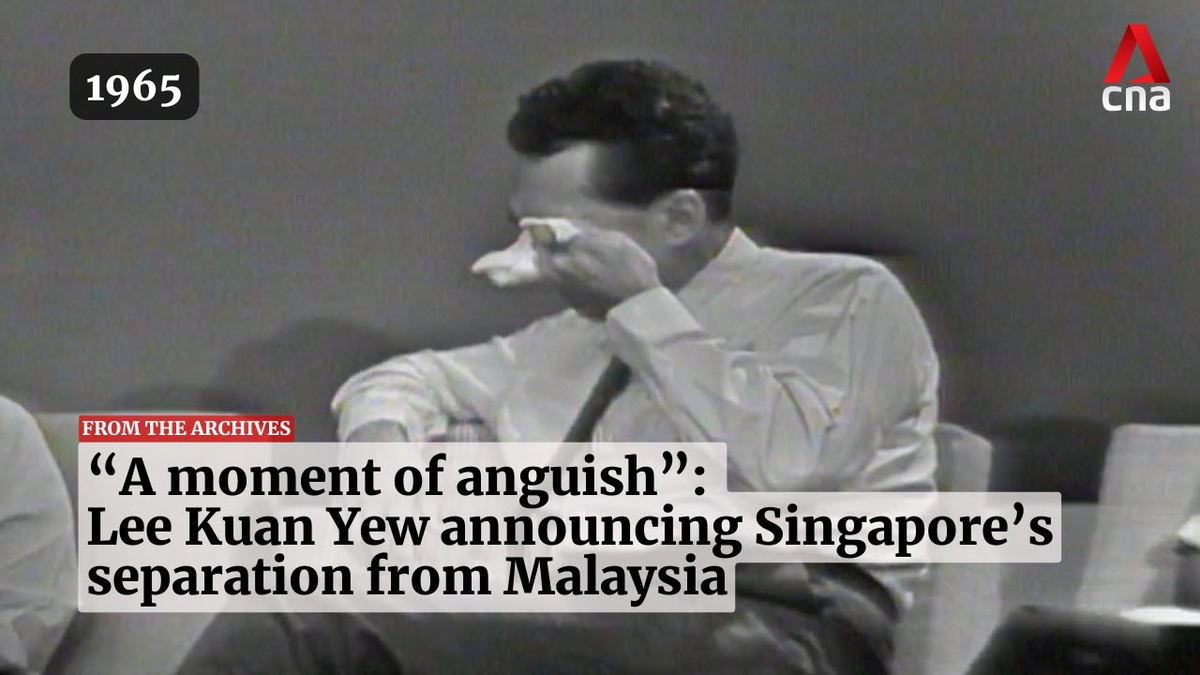
Singapore separates from the Federation of Malaysia and gains its independence.
Singapore
Political
Economic Transformation
4 min read
Updated By: History Editorial Network (HEN)
Published:
"After two years of political union, Lee Kuan Yew, Prime Minister of Singapore, signed a separation agreement with Malaysia. The merger between Singapore and Malaysia in 1963 was intended to strengthen unity among the diverse populations. However, the differing political ideologies and economic disparities led to tensions between the two regions. Singapore, predominantly Chinese, faced challenges in aligning with the Malay-dominated government of Malaysia.
The separation agreement marked the end of a tumultuous period for both countries. Singapore emerged as an independent nation, with Lee Kuan Yew at the helm. The decision to part ways was met with mixed reactions, as some viewed it as a setback to regional cooperation while others saw it as an opportunity for Singapore to pursue its own economic and social policies.
The aftermath of the separation saw Singapore embarking on a journey towards nation-building. Despite limited resources and land, the country focused on industrialization, education, and infrastructure development. This strategic vision laid the foundation for Singapore's rapid transformation into a global economic powerhouse.
The separation agreement with Malaysia was a defining moment in Singapore's history, shaping its identity as a sovereign nation. It marked the beginning of a new chapter filled with challenges and opportunities. Lee Kuan Yew's leadership and determination played a crucial role in guiding Singapore through this transition and setting it on a path towards progress and prosperity.
#LeeKuanYew #Singapore #Malaysia #SeparationAgreement #NationBuilding #Independence #EconomicTransformation"

Explore the Life Moments of
 AI Twin