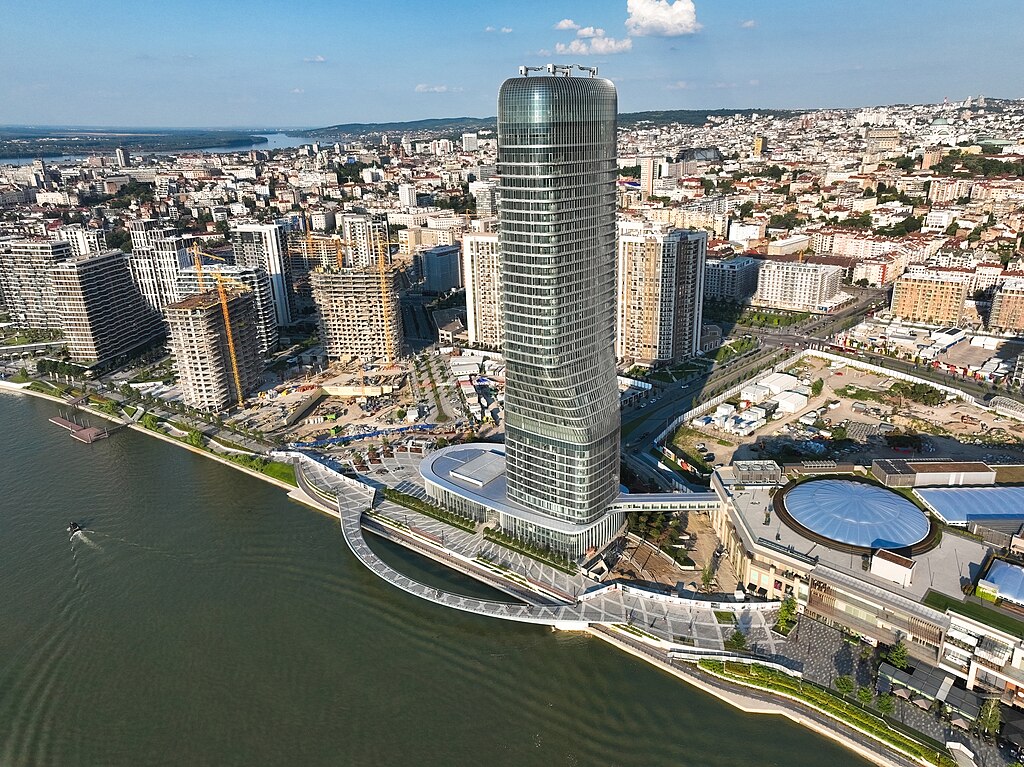
Major urban redevelopment project starts in Belgrade.
Serbia

Urban Redevelopment
Economic Impact
5 min read
Updated By: History Editorial Network (HEN)
Published:
The controversial Belgrade Waterfront project, a large-scale urban redevelopment effort, officially commenced, marking a significant phase in Serbia's development strategy. The ambitious initiative aimed to transform 1.8 million square meters of land along the Sava River in the capital, Belgrade, into a modern commercial, residential, and entertainment district.
Background to the Belgrade Waterfront project includes a partnership between the Serbian government and Eagle Hills, a United Arab Emirates-based real estate development firm. The project promised an array of infrastructural advancements, including high-rise buildings, luxury apartments, hotels, and shopping malls. Proponents of the redevelopment argued that the project had the potential to boost the local economy, generate employment, and modernize Belgrade's urban landscape.
The economic impact was significant. Expected investments were estimated to be around 3.5 billion euros. Backers of the project anticipated that it would attract foreign investment, elevate Belgrade's standing in global cities, and stimulate economic growth through increased tourism and business activities. Job creation figures projected the development would generate around 20,000 new employment opportunities.
However, the Belgrade Waterfront project also faced substantial opposition. Critics raised concerns about environmental implications, transparency in the project’s approval, and the massive privatization of public land. In particular, the forced demolitions and evictions of existing residents generated significant public outcry and protests. Moreover, the opaque process by which contracts and agreements were made prompted questions about corruption and governance.
Statistically, the Belgrade Waterfront was designed to feature over 6,000 residential units, 2,200 hotel rooms, and a 200-meter-tall tower, set to become the tallest building in the Balkans. Ultimately, the plan was seen as an emblem of Belgrade’s aspirations to remodel itself as a vibrant, high-tech urban hub.
While the project's future continues to evolve, the commencement of the Belgrade Waterfront remains a pivotal turning point in Serbia's urban development narrative. Its long-term effects on the city, both economically and socially, are part of an ongoing debate among urban planners, residents, and political analysts.
#UrbanRedevelopment #BelgradeWaterfront #EconomicImpact #PublicOpposition #SerbiaUrbanization #MoofLife
Primary Reference
Post-socialist discourse of urban megaproject development: From ...

Explore the Life Moments of
 AI Twin