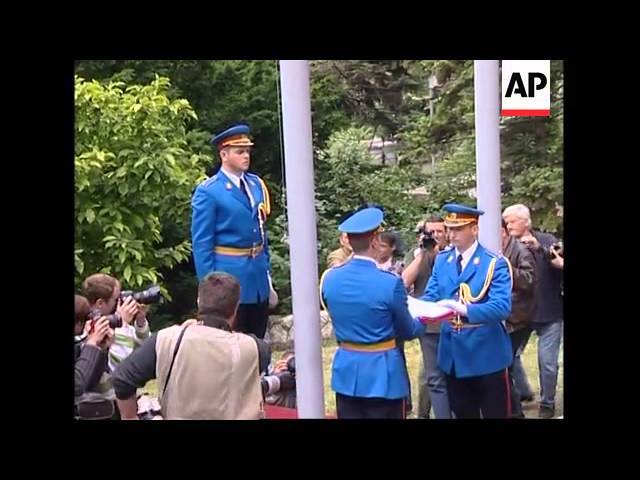
Independence Declaration following breakup of Serbia and Montenegro.
Serbia

Political
Global Trade
6 min read
Updated By: History Editorial Network (HEN)
Published:
The Proclamation of Serbia as an independent state marked a pivotal transformation in the political landscape of the Balkans. This development followed the dissolution of the State Union of Serbia and Montenegro. In a referendum, the majority of Montenegrin voters favored independence from the union, leading to its formal dissolution. Following the referendum, Montenegro declared its independence, which subsequently facilitated Serbia's emergence as an independent nation.
Historically, Serbia had been part of various political unions and configurations in the Balkan Peninsula. The federation of Serbia and Montenegro was established in the early 2000s, but the relationship had been fraught with political and economic challenges. Many Montenegrins and Serbians expressed desires for more autonomy, culminating in the decision to hold a referendum.
The referendum in Montenegro saw a voter turnout of approximately 86%, with 55.5% voting in favor of independence. This result met the 55% threshold set by the European Union for the referendum to be considered valid. Following Montenegro's declaration of independence, Serbia's National Assembly quickly moved to proclaim Serbia as an independent state.
The immediate impact included the need to establish new diplomatic relations, assume international treaty obligations previously held by the Union, and reorganize governmental institutions. Serbia maintained continuity in legal and political frameworks, ensuring a stable transition period.
From an economic perspective, Serbia faced challenges and opportunities following independence. The need to establish independent fiscal and monetary policies aimed at stabilizing the economy was crucial. Regional cooperation and integration with European structures also became focal points of the new state’s foreign policy.
On the international stage, the independence of Serbia was broadly recognized. Major international organizations, including the United Nations and the European Union, acknowledged Serbia as a sovereign state. This moment also set the stage for Serbia's ongoing efforts towards EU membership, aiming to enhance political and economic integration with Europe.
In conclusion, the Proclamation of Serbia as an independent state was a significant reconfiguration of national sovereignty in the Balkans, driven by regional political will and international regulations. It underscored the dynamic nature of national identities and statehood in Southeastern Europe.
#SerbianIndependence #BalkanPolitics #NewNations #MoofLife
Explore the Life Moments of
 AI Twin