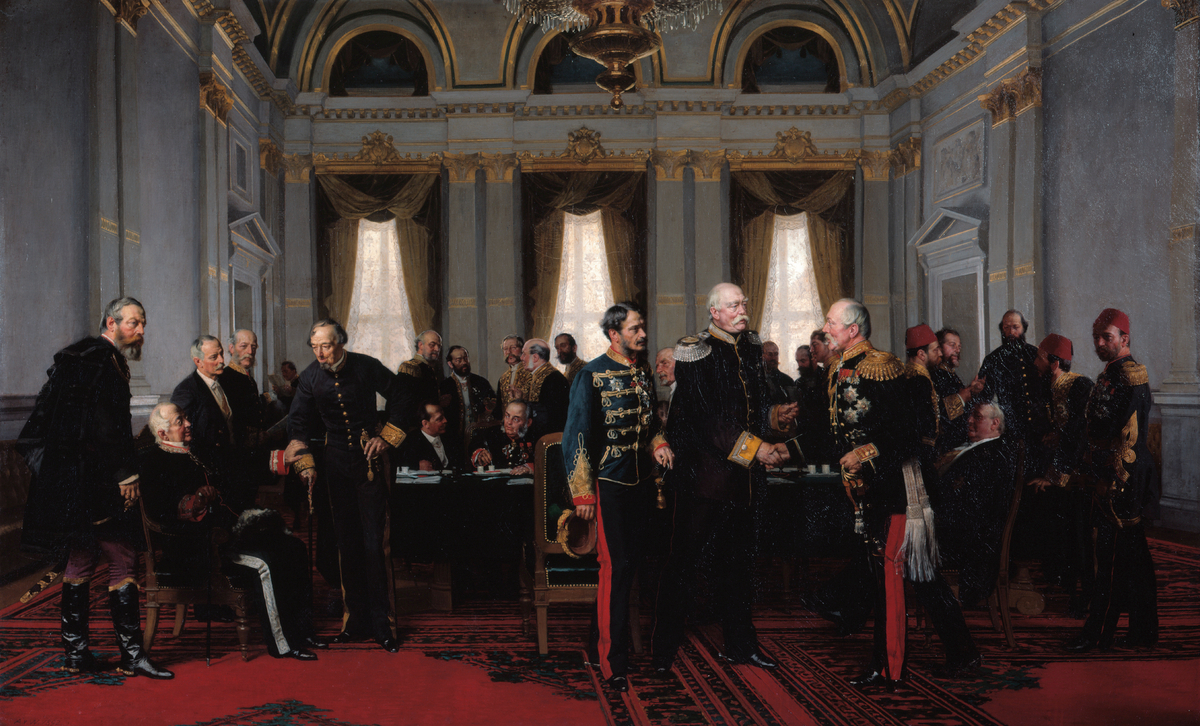
Congress of Berlin: Serbia Gains Independence
Serbia

Political
Global Trade
5 min read
Updated By: History Editorial Network (HEN)
Published:
In the latter part of the 19th century, the Congress of Berlin convened in response to the changing dynamics in Europe, influenced by the decline of the Ottoman Empire and the rise of nationalist movements. Serbia, part of the Ottoman Empire for centuries, had been asserting its desire for independence. Prior unrest and conflicts, notably the Russo-Turkish War, had already altered the geopolitical landscape, making changes inevitable.
During the Congress, major European powers, including Germany, Austria-Hungary, Russia, Britain, France, Italy, and the Ottoman Empire, gathered to discuss and reshape territorial boundaries. Amid intense negotiations and political maneuvering, Serbia emerged as one of the newly recognized independent states. Specific conditions and borders were outlined, balancing the interests of both the local populations and the broader political goals of the participating powers.
For Serbia, international recognition marked a pivotal shift. It not only redefined its own national identity but also influenced the region's future dynamics. The autonomy granted enabled Serbia to pursue independent domestic and foreign policies, including economic development and military reforms. Demographically, Serbia had a population of around 1.3 million people, predominantly ethnic Serbs, eager for self-governance after years of external domination.
The territorial adjustments not only impacted Serbia but also neighboring regions. Bosnia-Herzegovina, for example, while still nominally under Ottoman sovereignty, was placed under Austro-Hungarian administration, setting the stage for future conflicts. The Congress’s decisions often balanced local aspirations with the strategic interests of great powers, leading to a complex and sometimes unstable regional order.
The resolution achieved through the Congress of Berlin provided a foundation upon which Serbia built its present-day statehood. This occasion marked a turning point in its national history and played an essential role in the broader history of the Balkans. The decisions taken during this diplomatic gathering had long-term implications, influencing subsequent conflicts and alliances in the region.
#SerbiaHistory #BalkanPolitics #CongressOfBerlin #EuropeanDiplomacy #MoofLife
Primary Reference
Montenegro - The World Factbook
Explore the Life Moments of
 AI Twin