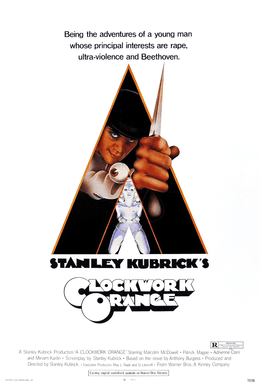
A Clockwork Orange
Film Analysis
Cinematic Techniques
Psychological Themes
4 min read
Updated By: History Editorial Network (HEN)
Published:
Updated:
In the film A Clockwork Orange, directed by Stanley Kubrick, the use of alien imagery plays a crucial role in shaping the viewer's perception of the narrative. The Korova Milkbar, a central location in the film, is characterized by its surreal and unconventional decor, which initially appears foreign and unsettling. However, as the scenes set in the Milkbar are repeated throughout the film, this alien environment gradually becomes more familiar to the audience. This technique highlights the psychological impact of repeated exposure to unfamiliar settings, suggesting that what is initially perceived as strange can become normalized over time. The film's exploration of alien images serves to challenge the audience's understanding of reality and conformity, as the characters navigate a dystopian world where societal norms are distorted.
The impact of alien imagery in A Clockwork Orange extends beyond mere visual aesthetics; it also reflects the broader themes of the film, including violence, free will, and the nature of evil. The juxtaposition of familiar and alien elements prompts viewers to question their own perceptions and the influence of environment on behavior. The Korova Milkbar, with its striking design and unsettling atmosphere, becomes a symbol of the film's critique of a society that desensitizes individuals to violence and moral decay. By immersing the audience in this alien world, Kubrick effectively engages them in a dialogue about the implications of a culture that embraces such dissonance. The film's legacy continues to resonate, as it remains a powerful commentary on the complexities of human nature and societal influence.
#mooflife
#MomentOfLife
#AClockworkOrange
#AlienImagery
#KorovaMilkbar
#StanleyKubrick
#DystopianFilm

Explore the Life Moments of
 AI Twin