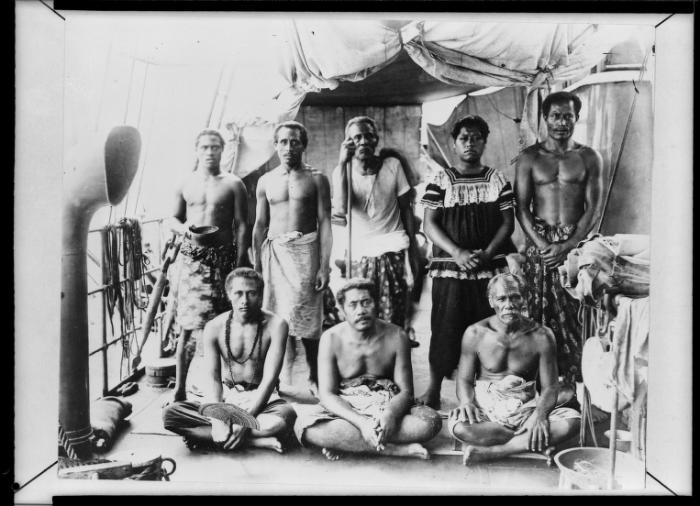
Exile of Lauaki Mamoe & Mau a Pule leaders in Samoa by German authorities.
Samoa
Political
Global Trade
4 min read
Updated By: History Editorial Network (HEN)
Published:
Updated:
Lauaki Namulau'ulu Mamoe and several Mau a Pule leaders faced exile to Saipan in the Northern Marianas by German colonial authorities. This action resulted from their opposition to German policies in Samoa, particularly concerning the land and governance structures that upended the traditional Samoan way of life. The resistance, led by the Mau a Pule organization, was a response to the imposition of foreign rule and suppression of indigenous customs.
Lauaki and his compatriots engaged in non-violent protests and political agitation, seeking to retain Samoan autonomy and protect communal lands. However, their activities were perceived as a threat to German administration. Consequently, the colonial authorities decided to dismantle the organized resistance by exiling its leaders. Lauaki, known for his oratory skills and leadership, became a symbolic figure of Samoan nationalism during this period.
The exile was intended to quash the independence movement and consolidate German control over Samoa. It significantly weakened the Mau a Pule's ability to coordinate resistance and destabilized the leadership structure within the organization. The removal of these key figures had immediate consequences for the movement's momentum and morale.
In broader terms, the exile of Lauaki and his fellow leaders underscored the lengths to which colonial powers would go to maintain authority. It highlighted the tensions between indigenous governance models and European colonial strategies in the Pacific. The cultural and political impact of these events continued to resonate in subsequent years, influencing future generations of Samoan leaders and resistance movements.
#Exile #SamoanResistance #ColonialImpact #MauMouvement #MoofLife
Primary Reference
Lauaki Namulauulu Mamoe - Wikipedia
Explore the Life Moments of
 AI Twin