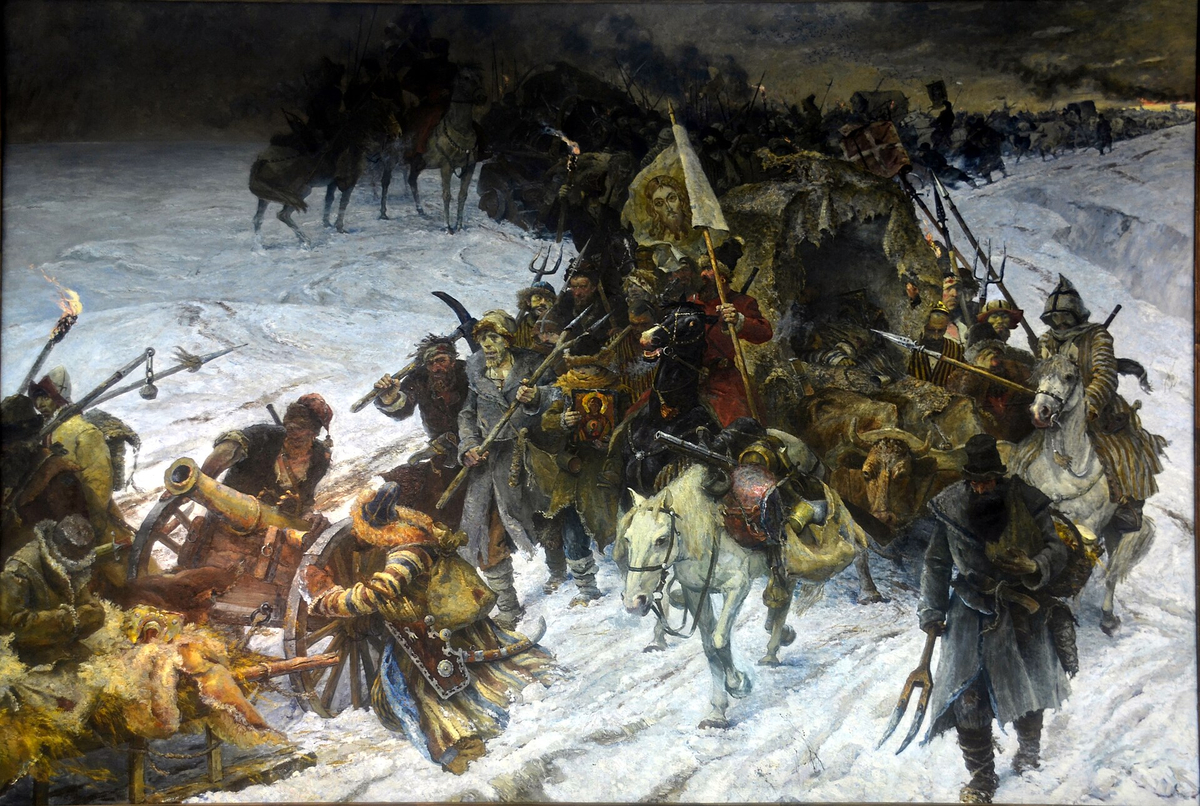
Pugachev's Rebellion Against Catherine the Great
Russia
Political
Social Unrest
4 min read
Updated By: History Editorial Network (HEN)
Published:
Pugachev's Rebellion marked a significant challenge to Catherine the Great's authority. Emelian Pugachev, a Cossack leader, rallied discontent peasants and Cossacks in the Urals region against Catherine's reforms and policies. The rebellion was fueled by widespread dissatisfaction with serfdom, heavy taxation, and the administration's neglect of the lower classes.
Pugachev's forces quickly gained momentum, capturing key cities and towns in the region. At its peak, the rebellion controlled vast territories along the Volga River, posing a real threat to Catherine's rule. Pugachev declared himself as the rightful tsar, seeking to overthrow Catherine's regime and establish a more equitable order.
The rebellion was particularly brutal, marked by widespread violence and atrocities committed by both sides. Catherine responded ruthlessly, dispatching her armies to suppress the uprising. Pugachev's forces were eventually defeated, with the leader captured, tried, and executed. The rebellion was swiftly crushed, and its leaders were harshly punished.
The impact of Pugachev's Rebellion was profound. Despite its failure, the uprising exposed the deep-seated grievances and tensions within Russian society. It highlighted the fragility of Catherine's rule and the challenges of modernizing a vast and diverse empire. The suppression of the rebellion also led to further crackdowns on dissent and reinforced Catherine's autocratic rule.
In conclusion, Pugachev's Rebellion was a significant event in Russian history, reflecting the social upheaval and discontent of the era. It underlined the complexities of governing a vast empire and the limits of imperial power. The rebellion's legacy endured as a symbol of resistance against oppressive rule and the struggle for social justice. #PugachevsRebellion #CatherineTheGreat #RussianHistory

Explore the Life Moments of
 AI Twin