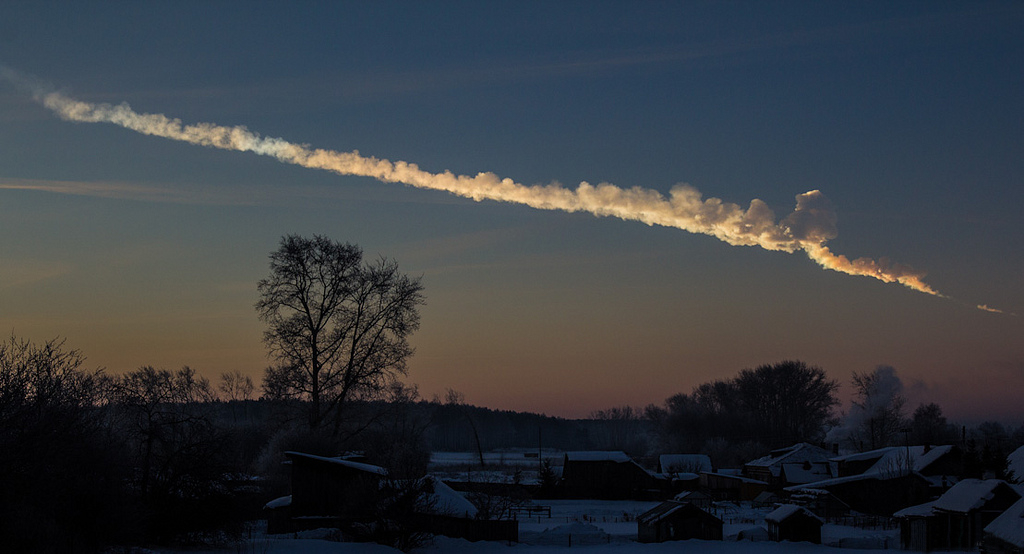
Meteor explosion injures over 1,200 in Chelyabinsk, with immense energy.
Russia
Science
4 min read
Updated By: History Editorial Network (HEN)
Published:
The Chelyabinsk meteor incident shocked the world as a large meteor entered the Earth's atmosphere and disintegrated over Chelyabinsk, Russia. The meteor's explosion released energy estimated to be 26 to 33 times more powerful than the atomic bomb dropped on Hiroshima during World War II. The explosion caused a shock wave that damaged over 7,000 buildings and shattered glass, injuring more than 1,200 people.
The incident took place in the early morning, as many residents were starting their day. The bright streak of light in the sky followed by a powerful explosion caused panic and confusion among the locals. The shock wave blew out windows, sending glass shards flying, leading to the majority of injuries. Emergency services acted swiftly to attend to the wounded and assess the extensive damage caused by the blast.
Scientists later determined that the meteor was approximately 20 meters in diameter and weighed around 13,000 metric tons before entering the Earth's atmosphere. The explosion created a fireball brighter than the sun and released a powerful shock wave that traveled around the Earth twice. The event served as a stark reminder of the potential dangers posed by near-Earth objects.
The Chelyabinsk meteor incident prompted discussions about enhancing efforts to detect and track asteroids and other celestial objects that could pose a threat to our planet. It also highlighted the need for international cooperation in developing strategies to mitigate the risk of potential impacts. The event left a lasting impact on the community, both in terms of physical damage and psychological trauma.
#Chelyabinsk #MeteorImpact #AsteroidThreat #RussiaSafety #InternationalCooperation

Explore the Life Moments of
 AI Twin