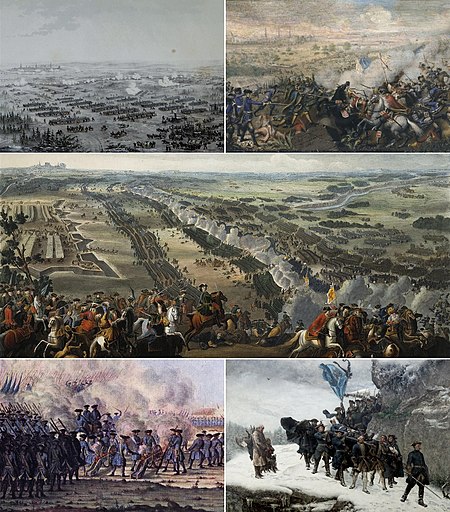
Great Northern War: Conflict between Sweden and Russia Begins
Russia
Political
4 min read
Updated By: History Editorial Network (HEN)
Published:
In the early 18th century, the Great Northern War erupted between Russia and Sweden, fueled by territorial disputes and power struggles in the Baltic region. The conflict was triggered by Sweden's dominance over the Baltic states, concerning Peter the Great of Russia, who sought to expand his empire's access to the sea.
The war had a significant impact on both countries, as well as on the wider European political landscape. It marked a turning point in Russia's emergence as a major European power and set the stage for its territorial expansion into the Baltic region. The conflict also resulted in the decline of Sweden as a dominant military force in the region, leading to the rise of Russia as a formidable rival.
The Great Northern War was characterized by a series of battles and sieges, with both sides suffering heavy casualties. The war lasted for over two decades, with shifting alliances and military campaigns across the Baltic states and Scandinavia. The Treaty of Nystad in 1721 ultimately ended the war, solidifying Russia's control over the Baltic states and marking the beginning of its dominance in the region.
The repercussions of the Great Northern War were felt for years to come, shaping the political and military dynamics of Europe. It highlighted Russia's growing influence and territorial ambitions, while also showcasing Sweden's decline as a European power. The conflict had lasting implications for the balance of power in the Baltic region and beyond, setting the stage for future conflicts and alliances in the years that followed.
#GreatNorthernWar #Russia #Sweden #18thCentury #EuropeanHistory
Explore the Life Moments of
 AI Twin