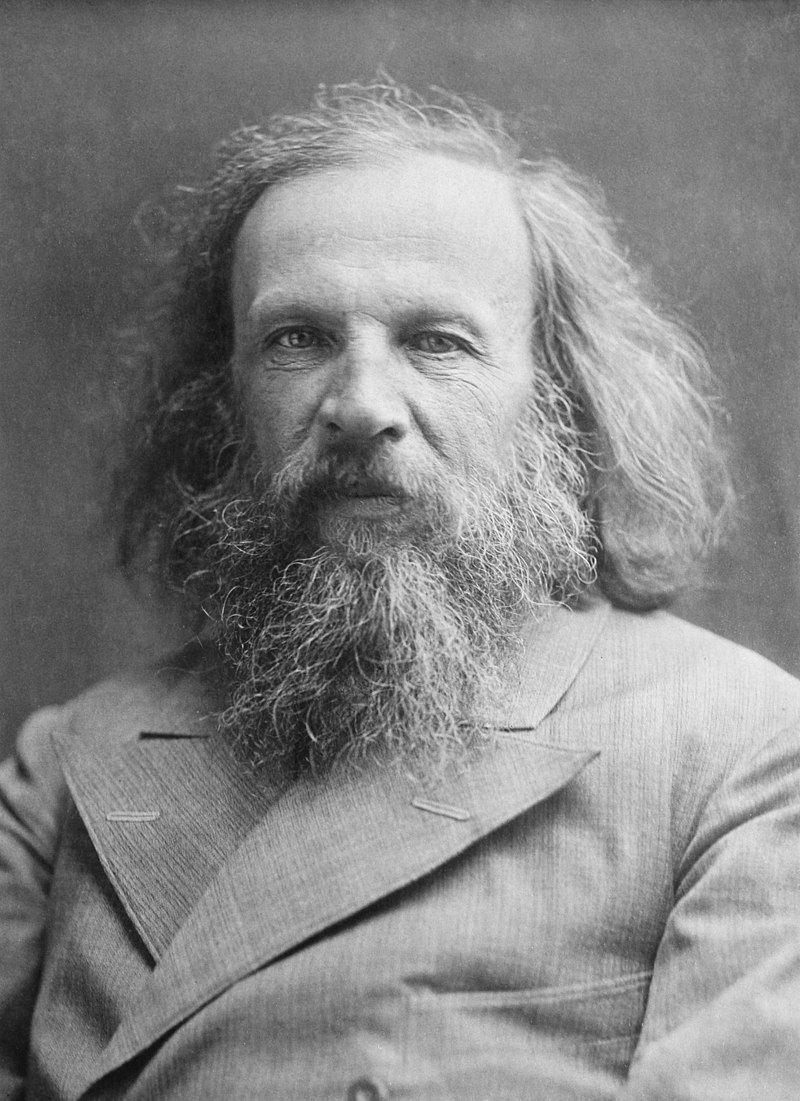
Dmitri Mendeleev presents the periodic table
Russia
Science
Innovation
4 min read
Updated By: History Editorial Network (HEN)
Published:
In March 1869, Dmitri Mendeleev introduced the periodic table of elements to the Russian Chemical Society in St. Petersburg. Mendeleev's presentation marked a significant milestone in the field of chemistry. The periodic table he proposed arranged the 63 known elements based on their atomic weights and chemical properties. This organization allowed for the prediction of properties for undiscovered elements, leaving gaps in the table for them to be placed once discovered.
Mendeleev's periodic table revolutionized the way scientists approached the study of elements and their compounds. By grouping elements with similar properties together, Mendeleev laid the foundation for the modern understanding of chemistry. His work provided a systematic framework for scientists to explore and expand their knowledge of the fundamental building blocks of matter.
The impact of Mendeleev's periodic table extended far beyond the scientific community. Industries, educators, and researchers worldwide adopted his system of organization, leading to advancements in various fields. Mendeleev's contribution also facilitated the development of new technologies and applications across different sectors.
In essence, Mendeleev's presentation of the periodic table in 1869 was a groundbreaking moment that reshaped the landscape of chemistry. His systematic approach to classifying elements paved the way for countless discoveries and innovations, making it a cornerstone of modern chemistry.
#DmitriMendeleev #PeriodicTable #Chemistry #Innovation #RussianChemistry

Explore the Life Moments of
 AI Twin