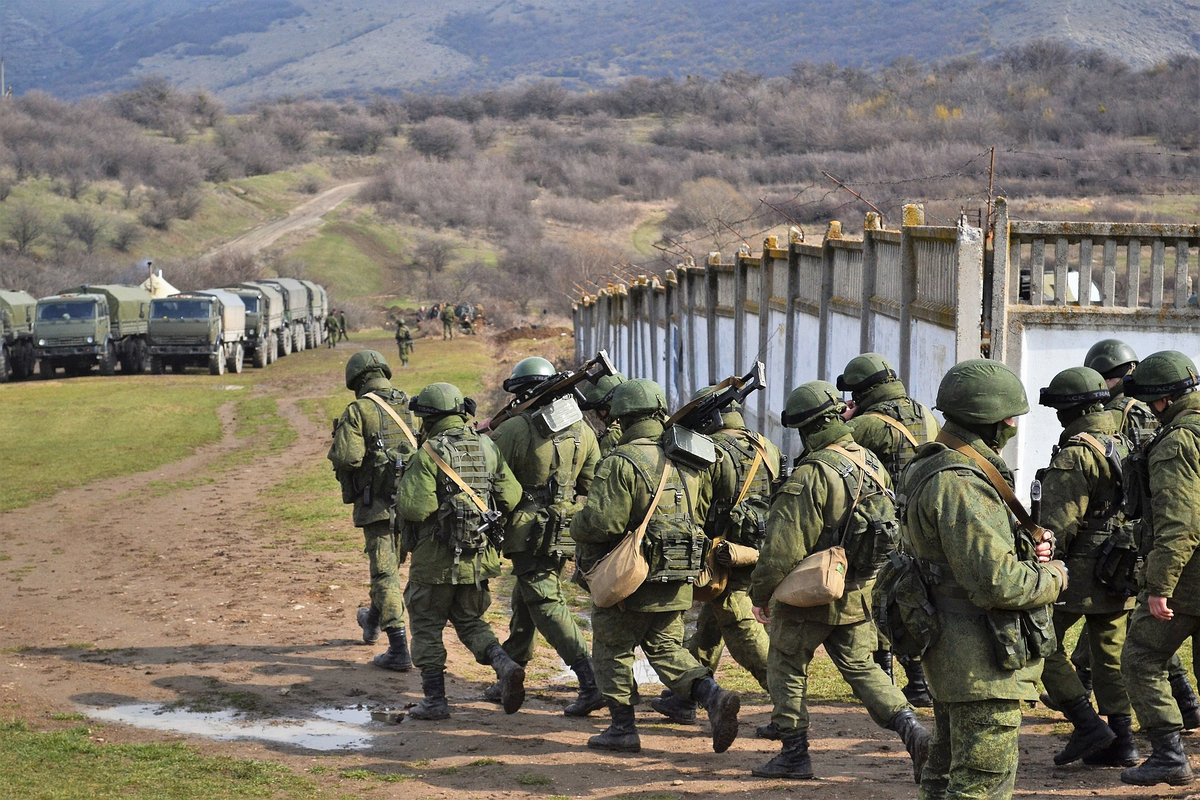
Crimea annexed amid Ukrainian unrest.
Russia
Political
International Relations
4 min read
Updated By: History Editorial Network (HEN)
Published:
Following political unrest in Ukraine, Russia annexed Crimea, a region located on the Black Sea coast. The unrest in Ukraine began when the country's president rejected an agreement for closer ties with the European Union, leading to widespread protests and eventually his removal from office.
The Russian government, under President Vladimir Putin, capitalized on the chaos in Ukraine by sending troops into Crimea under the pretext of protecting Russian-speaking citizens and securing military interests. A controversial referendum was held in Crimea, which was not recognized by most of the international community, resulting in an overwhelming vote in favor of joining Russia.
The annexation of Crimea sparked international condemnation and tensions between Russia and Western countries. The United States and the European Union imposed sanctions on Russia, leading to a deterioration in diplomatic relations. Ukraine, meanwhile, faced territorial loss and ongoing conflict with pro-Russian separatists in the eastern part of the country.
The annexation of Crimea had significant implications for global politics, with many seeing it as a violation of international law and norms. It also raised concerns about the security of other countries in the region and the potential for future territorial disputes.
The event highlighted Russia's assertiveness in its foreign policy and its willingness to use military force to achieve its strategic objectives. It also underscored the complex relationship between Russia and the West, with tensions continuing to simmer in the years that followed.
#Russia #Crimea #Ukraine #Annexation #InternationalRelations #Geopolitics
Explore the Life Moments of
 AI Twin