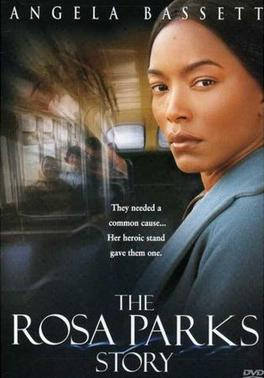
The Rosa Parks Story Film
United States of America
Film Analysis
Civil Rights History
Media Studies
5 min read
Updated By: History Editorial Network (HEN)
Published:
Updated:
The Rosa Parks Story premiered on the CBS television network on 24/02/2002 as a biographical drama chronicling the life and civil rights activism of Rosa Parks. The film explored Parks’s upbringing, personal experiences with segregation, role in the Montgomery bus boycott, and lasting influence on the American Civil Rights Movement.
The television movie starred acclaimed actress Angela Bassett as Rosa Parks, while legendary singer and actress Cicely Tyson portrayed Parks’s mother, Leona McCauley. The production was directed by Julie Dash, becoming one of the major network television dramatizations focused specifically on Rosa Parks’s life and activism. The film traced Parks’s early years in Alabama, her work with the National Association for the Advancement of Colored People (NAACP), and the events leading to her arrest on 01/12/1955 after refusing to surrender her seat on a segregated Montgomery city bus.
Beyond the famous bus protest, the film also highlighted Parks’s broader involvement in civil rights organizing and community activism. It portrayed the social conditions of segregation-era Alabama and the emergence of the Montgomery bus boycott, the 381-day protest campaign that helped transform the national Civil Rights Movement and elevate Dr. Martin Luther King Jr. to national prominence.
Critics and historians noted the film’s effort to present Rosa Parks as a lifelong activist rather than only as a symbolic historical figure associated with a single event. Angela Bassett received praise for her performance, and the production contributed to renewed public discussion about the personal sacrifices and grassroots organizing behind the Civil Rights Movement.
The film later received several award nominations and became part of educational and historical programming frequently shown during Black History Month observances and civil rights studies courses. Its broadcast on a major American television network helped introduce Rosa Parks’s story to wider audiences in the early 2000s.
Why This Moment Matters :
The release of The Rosa Parks Story demonstrated the growing role of television films in bringing civil rights history to mainstream audiences. By focusing on Rosa Parks’s personal life and long-term activism, the production helped deepen public understanding of the woman behind one of the most recognized acts of protest in American history.
#mooflife
#MomentOfLife
#RosaParks
#CivilRightsMovement
#AngelaBassett
#FilmCritique
#HistoricalRepresentation
Primary Reference
The Rosa Parks Story

Explore the Life Moments of
 AI Twin