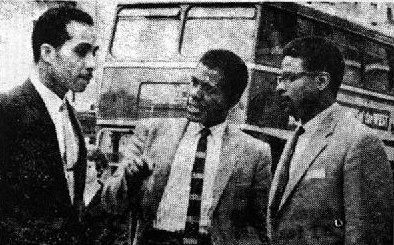
Stephenson's Bus Boycott in Bristol
Bristol, England, United Kingdom
6 min read
Updated By: History Editorial Network (HEN)
Published:
Updated:
In April 1963, civil rights activists in Bristol, England, launched the Bristol Bus Boycott, a protest campaign directly inspired by Rosa Parks and the 1955 Montgomery Bus Boycott in the United States. Led by British activist Paul Stephenson and supported by the West Indian Development Council, the boycott challenged racial discrimination in employment practices at the Bristol Omnibus Company, which refused to hire Black and Asian bus crews despite labor shortages.
The boycott officially began on 30/04/1963 after Guy Bailey, a young Black man from Barbados, was denied employment as a bus conductor solely because of his race. The Bristol Omnibus Company operated an unofficial “colour bar” that blocked non-white workers from positions as drivers and conductors. Activists organized public demonstrations, encouraged passengers to avoid using the buses, and built support from students, trade unions, churches, and local community organizations.
Paul Stephenson openly acknowledged the influence of Rosa Parks and the Montgomery Bus Boycott when organizing the campaign. The Bristol protest adopted similar nonviolent tactics, using economic pressure and public attention to challenge institutional racism. The boycott lasted approximately 60 days and gained national media coverage across the United Kingdom.
On 28/08/1963, the Bristol Omnibus Company announced an end to its discriminatory hiring policy. Shortly afterward, Raghbir Singh, a Sikh worker, and Guy Bailey became among the first non-white bus conductors employed by the company. The campaign is widely regarded as one of the most important civil rights protests in modern British history and helped increase public discussion around racial discrimination in the United Kingdom during the 1960s.
Although Rosa Parks was not directly involved in the Bristol movement, her actions in Montgomery had become an international symbol of organized resistance against racial segregation. The success of the Montgomery Bus Boycott demonstrated how coordinated community action and economic protest could challenge discriminatory systems, influencing civil rights campaigns far beyond the United States.
Historical Significance :
The Bristol Bus Boycott showed how the influence of Rosa Parks and the American civil rights movement extended internationally during the 1960s. The campaign helped expose racial discrimination in Britain and contributed to wider debates that later shaped race relations legislation in the United Kingdom.
#mooflife
#MomentOfLife
#BristolBusBoycott
#PaulStephenson
#RacialEquality
#CivilRights
#EmploymentDiscrimination
Primary Reference
Bristol Bus Boycott

Explore the Life Moments of
 AI Twin