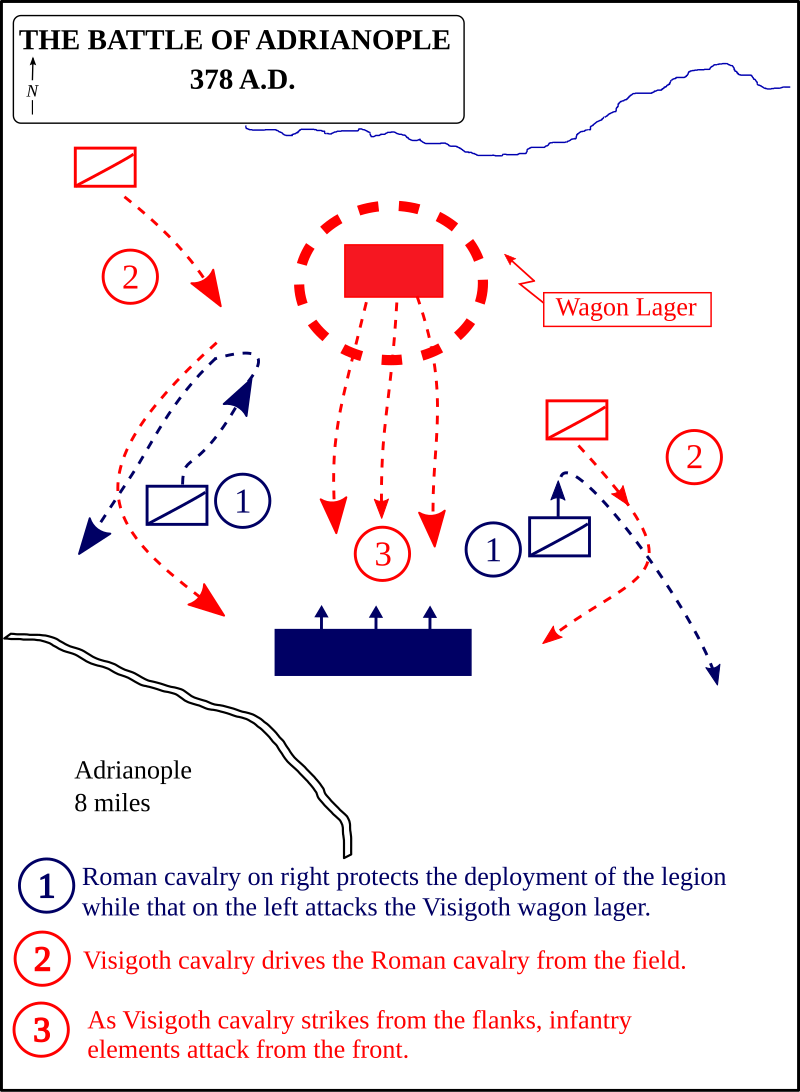
The Visigoths triumph over Roman army at Adrianople
Romania
Military
4 min read
Updated By: History Editorial Network (HEN)
Published:
In 378, the Visigoths under Fritigern achieved a decisive victory over the Roman army at the Battle of Adrianople. This clash is regarded as a significant turning point in Roman history, marking the first time a Roman emperor, Valens, was killed in battle by a foreign foe. Prior to the battle, the Visigoths, a Germanic tribe, had been displaced by the aggressive Huns and sought refuge within the borders of the Roman Empire. However, mistreatment and lack of provisions by the Romans led to tensions that culminated in the Visigoths rising against their oppressors.
The Roman army, underestimating the Visigoths' military prowess and facing difficulties in the scorching summer heat, suffered a devastating defeat. Emperor Valens and a significant portion of his troops were killed, ensuring a major blow to Roman military strength in the region. The aftermath of the battle saw the Visigoths looting and pillaging the surrounding areas, further weakening Roman control.
The Battle of Adrianople had profound consequences, hastening the decline of the Western Roman Empire. It exposed the vulnerability of the Roman military against external threats and highlighted the challenges of incorporating foreign tribes within the empire. The Visigothic victory paved the way for their subsequent invasions of the Roman territories, contributing to the disintegration of Roman authority in the region.
Overall, the Battle of Adrianople stands as a watershed moment in the history of the Roman Empire, underscoring the shifting power dynamics and the growing influence of barbarian tribes on the empire's fate.
#Visigoths #RomanEmpire #BattleofAdrianople #Fritigern

Explore the Life Moments of
 AI Twin