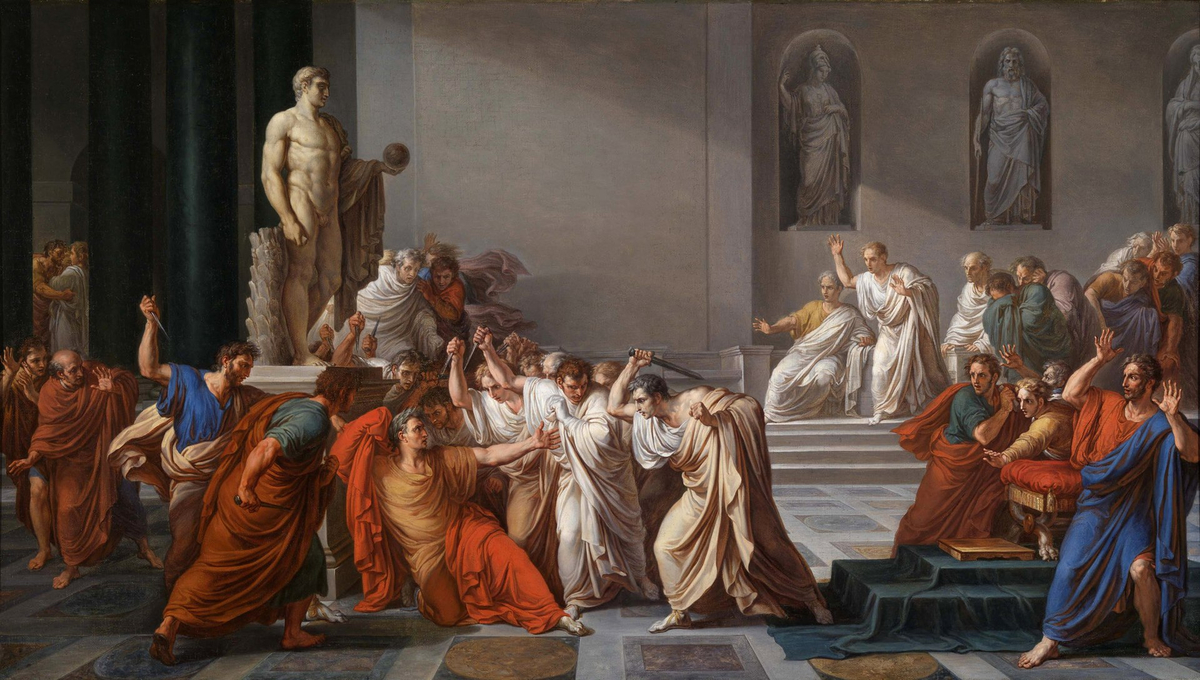
The Assassination of Julius Caesar
Rome
Politics
Ancient Rome
4 min read
Updated By: History Editorial Network (HEN)
Published:
Updated:
Julius Caesar was assassinated during a Senate meeting by a group of senators, including Gaius Cassius and Marcus Brutus. The conspirators believed that Caesar's growing power posed a threat to the Roman Republic, fearing that he aimed to establish himself as an autocratic ruler. This act of violence was not merely a personal vendetta but was rooted in a broader concern for the preservation of the Republic's traditional governance structures. The aftermath of the assassination saw a swift and chaotic response, as nearly all conspirators fled Rome to avoid potential retaliation from Caesar's supporters. This flight highlighted the immediate consequences of their actions and the deep divisions within Roman society regarding governance and power dynamics.
The assassination triggered a series of civil wars that ultimately dismantled the remnants of the Roman Republic. The power vacuum left by Caesar's death led to the rise of the Second Triumvirate, composed of Mark Antony, Octavian, and Lepidus, who sought to consolidate power and avenge Caesar. The ensuing conflicts resulted in significant political upheaval, culminating in the establishment of the Roman Empire. The events following Caesar's assassination marked a pivotal shift in Roman history, illustrating the fragility of republican governance in the face of individual ambition and the complexities of political alliances. The legacy of Caesar's assassination continues to resonate, serving as a cautionary tale about the consequences of political violence and the struggle for power.
#mooflife
#MomentOfLife
#JuliusCaesar
#Assassination
#RomanRepublic
#CivilWars
#PoliticalHistory
Primary Reference
https://en.wikipedia.org/wiki/Assassination_of_Julius_Caesar

Explore the Life Moments of
 AI Twin