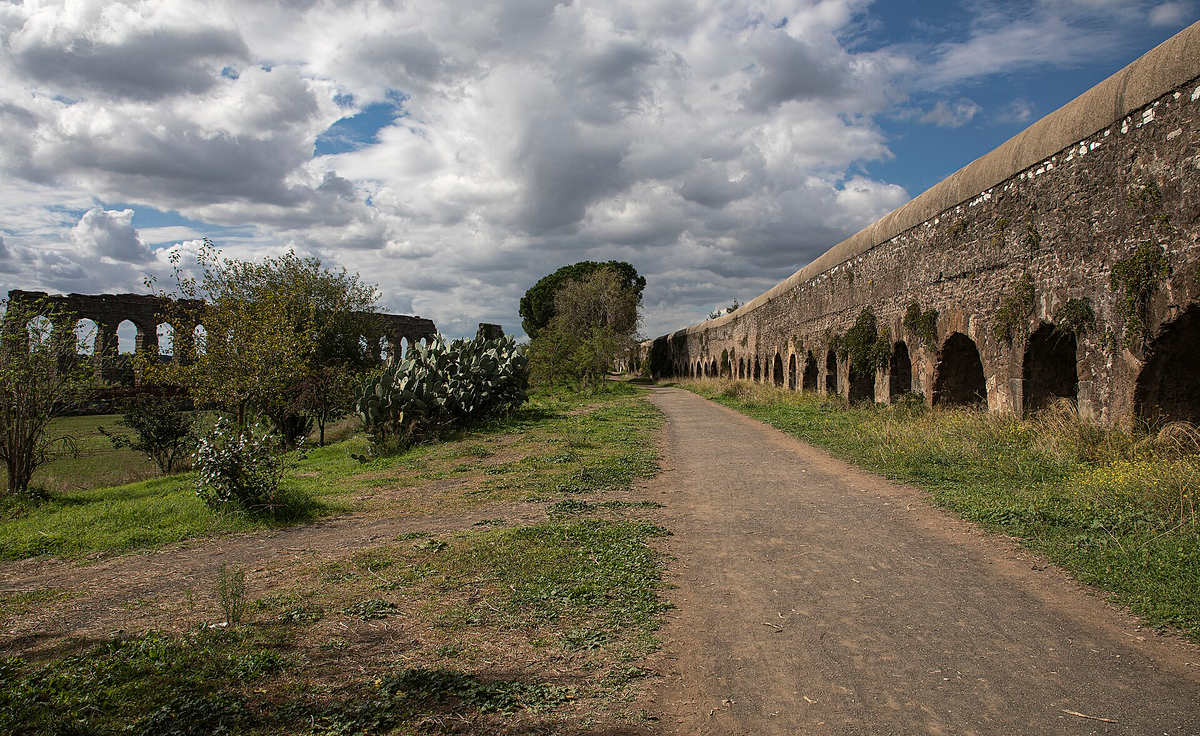
Rome's First Aqueduct and City Walls
Rome
Architecture
Ancient Rome
4 min read
Updated By: History Editorial Network (HEN)
Published:
Updated:
Rome's first aqueduct was constructed during a period of crisis, specifically the Punic Wars, which highlighted the need for a reliable water supply in the city. This aqueduct played a crucial role in providing a plentiful and clean water source, which was essential for the growing population and urban development. The successful implementation of this infrastructure not only addressed immediate water shortages but also laid the groundwork for future expansions of the city. As additional aqueducts were built, they facilitated the establishment of public baths, known as thermae, which became a central aspect of Roman social and cultural life. These baths served not only as places for hygiene but also as social hubs where citizens could gather, relax, and engage in various activities, reflecting the importance of public health and community in Roman society.
The construction of aqueducts significantly impacted Rome's urban landscape and its ability to sustain a large population. The aqueduct system allowed for the efficient distribution of water throughout the city, supporting both residential needs and public amenities. The presence of clean water contributed to improved sanitation and public health, reducing the risk of waterborne diseases. Furthermore, the aqueducts symbolized Roman engineering prowess and their commitment to urban planning. The Servian Wall, which surrounded the city, also played a vital role in protecting the growing population and infrastructure. Together, the aqueducts and city walls represented the advancements in Roman engineering and urban development, setting a precedent for future cities in terms of infrastructure and public health management.
#mooflife
#MomentOfLife
#RomanAqueducts
#PunicWars
#PublicBaths
#RomanEngineering
#UrbanDevelopment
Primary Reference
Roman aqueduct

Explore the Life Moments of
 AI Twin