Fall of Capua and Tarentum
Rome
Historical Events
Military History
Ancient Rome
4 min read
Updated By: History Editorial Network (HEN)
Published:
Updated:
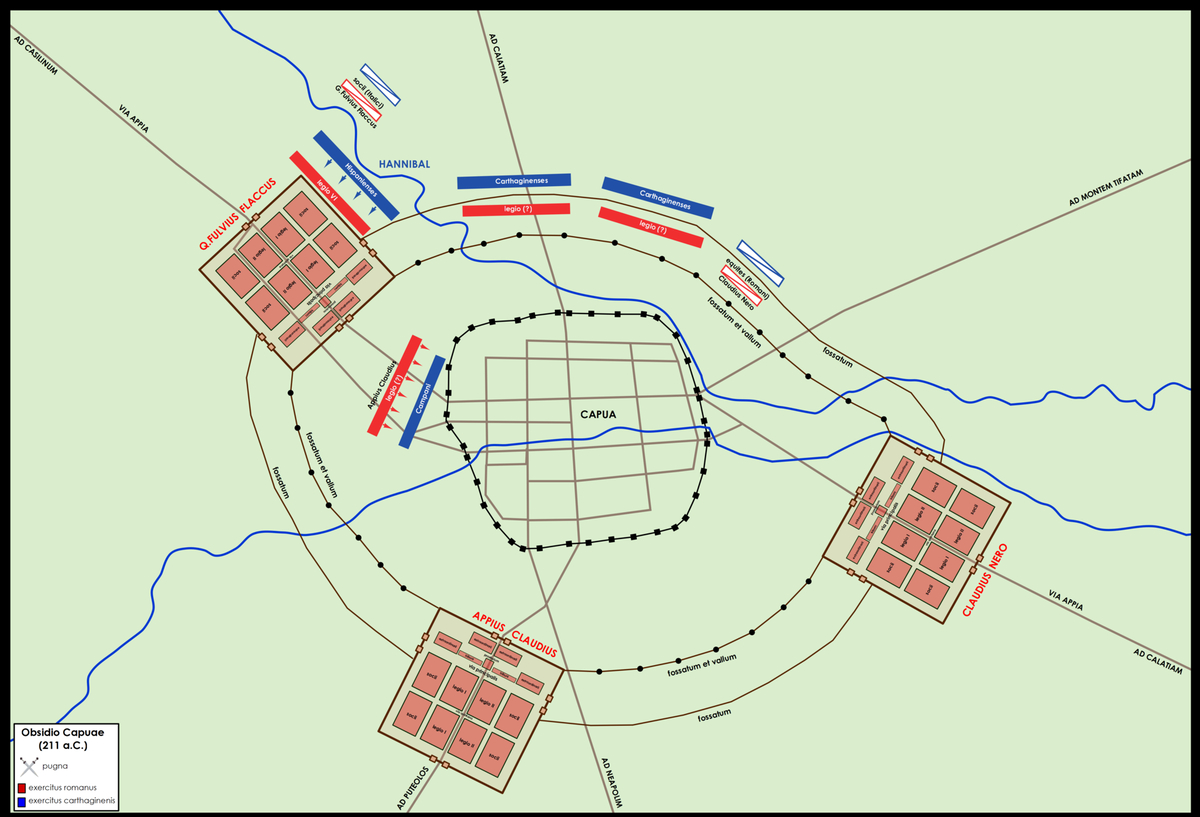
The fall of Capua and Tarentum marked a critical phase in the Second Punic War, significantly impacting the Roman military strategy against Carthage. Capua, once a stronghold for Hannibal's forces, was a vital ally for Carthage in Italy. Its capture by Roman forces under the command of Claudius Marcellus disrupted the supply lines and morale of the Carthaginian army. The siege of Capua was characterized by a prolonged engagement, where Roman forces employed a combination of blockades and direct assaults to weaken the city's defenses. The eventual surrender of Capua not only deprived Hannibal of a crucial base but also served as a rallying point for Roman troops, demonstrating the effectiveness of Roman military tactics and the resilience of their forces in the face of adversity.
Similarly, the fall of Tarentum further solidified Roman control over southern Italy. Tarentum was strategically important due to its location and its role as a naval base. The Roman siege of Tarentum involved a coordinated effort that included land and naval forces, showcasing the Romans' ability to adapt their strategies to different combat environments. The capture of Tarentum allowed Rome to secure its southern flank and provided a platform for further military operations against Carthaginian forces. The loss of these two cities not only weakened Carthaginian influence in Italy but also marked a turning point in the war, as Rome began to regain territories lost earlier in the conflict. The fall of Capua and Tarentum thus represented a shift in the balance of power, contributing to the eventual Roman victory in the Second Punic War.
#mooflife
#MomentOfLife
#SecondPunicWar
#Capua
#Tarentum
#RomanMilitaryStrategy
#Carthage
Primary Reference
Siege of Capua (211 BC)

Explore the Life Moments of
 AI Twin