Emergence of Civil Conflict and Sulla's Role
Rome
Politics
5 min read
Updated By: History Editorial Network (HEN)
Published:
Updated:
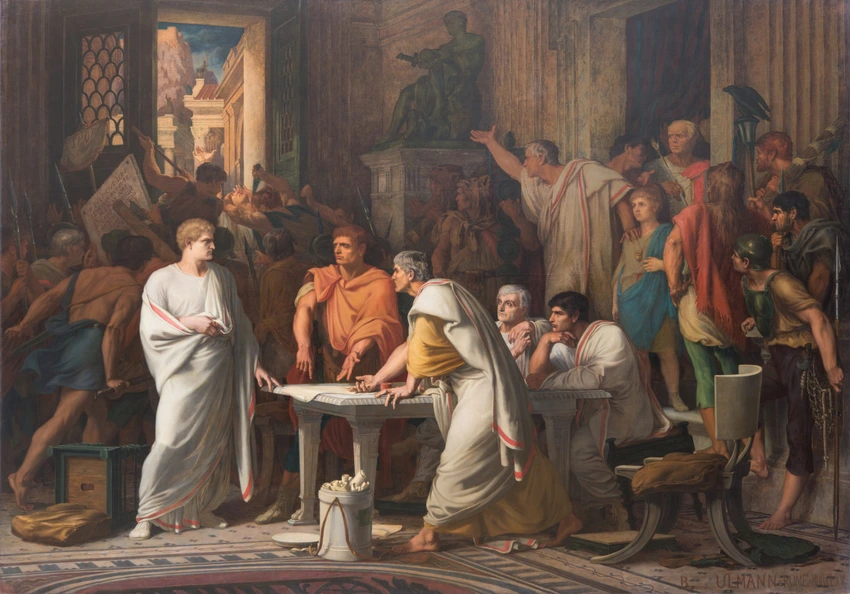
The emergence of civil conflict in ancient Rome can be traced back to the power struggle between prominent military leaders, particularly L. Cornelius Sulla and Gaius Marius. Sulla, a consul, was initially assigned command of an army to confront the Pontic king Mithridates. However, this assignment was challenged when Marius, a rival and influential figure in Roman politics, persuaded a tribune to reassign Sulla's command to himself. This act not only undermined Sulla's authority but also ignited tensions between the two leaders, leading to a significant escalation in their rivalry. In response to this political maneuvering, Sulla took the unprecedented step of marching on Rome with his army, a move that was both bold and controversial given that the city was largely undefended at the time. Sulla's actions were driven by a desire to reclaim his command and assert his dominance over Marius, whom he declared an outlaw along with eleven of his allies. This marked a pivotal moment in Roman history, as it was one of the first instances of a Roman general using military force against the city itself, setting a dangerous precedent for future conflicts.
The impact of Sulla's march on Rome was profound, as it not only highlighted the fragility of the Roman political system but also initiated a series of civil wars that would plague the Republic for years to come. Sulla's actions led to a breakdown of traditional political norms and the rise of military leaders who would increasingly rely on their armies to secure power. The conflict between Sulla and Marius was emblematic of the larger struggles within the Roman elite, where personal ambition often took precedence over the stability of the Republic. The civil strife that ensued contributed to the eventual decline of the Roman Republic, as the reliance on military force to resolve political disputes became more common. This period of unrest ultimately paved the way for the rise of figures like Julius Caesar, who would further exploit the weaknesses in the Roman political structure, leading to the end of the Republic and the establishment of imperial rule.
#mooflife
#MomentOfLife
#Sulla
#Marius
#RomanCivilConflict
#PonticWar
#RomanRepublic
Primary Reference
https://en.wikipedia.org/wiki/March_on_Rome_(88_BC)

Explore the Life Moments of
 AI Twin