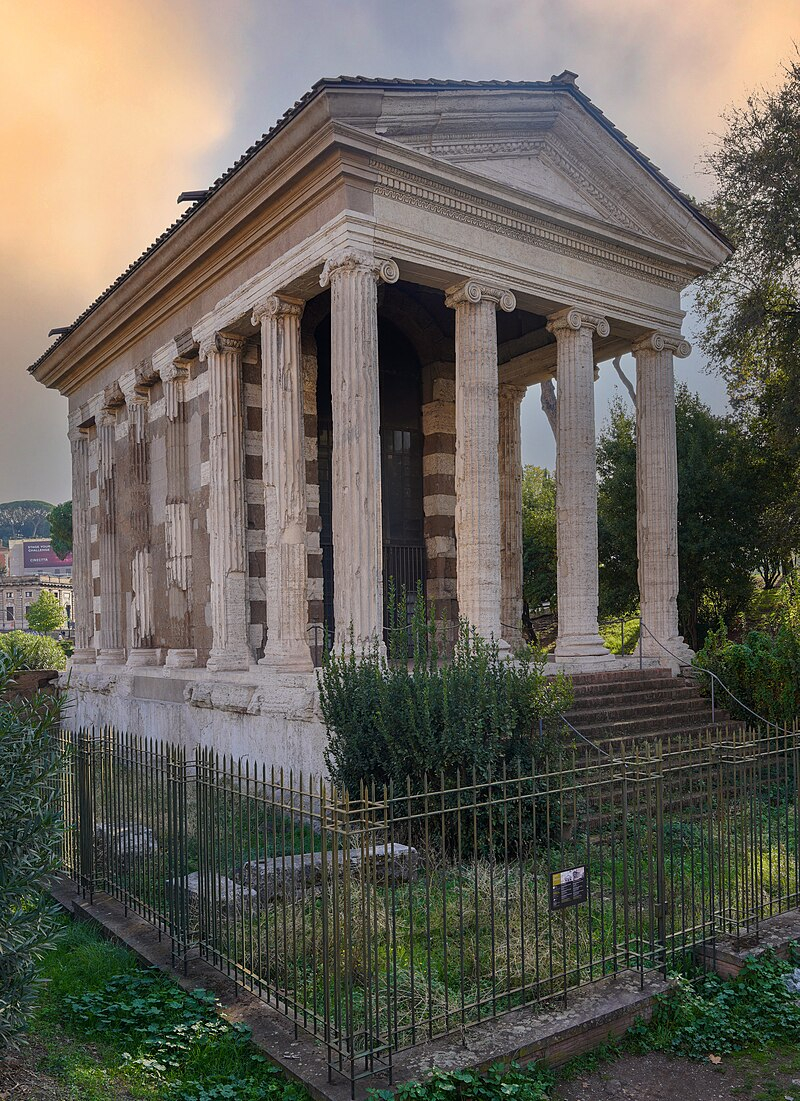
Construction of the Temple of Portunus
Rome
Ancient Roman Architecture
Religious Structures
Historical Landmarks
3 min read
Updated By: History Editorial Network (HEN)
Published:
Updated:
The Temple of Portunus, located in Rome, was dedicated to the god Portunus, who was associated with grain storage, keys, livestock, and ports. This temple reflects the Roman practice of honoring various deities that were believed to influence both the natural world and human affairs. The construction of the temple occurred during a period when the Romans were increasingly acknowledging the importance of their state deities, whose favor was considered essential for the well-being of the state. The temple's design is a notable example of Roman architecture, showcasing the influence of both Greek and Etruscan styles. Its structure features a high podium, a deep porch, and engaged columns, which are characteristic of the temple architecture of that era. The Temple of Portunus served not only as a religious site but also as a symbol of the agricultural and economic practices that were vital to Roman society. The worship of Portunus was particularly significant for those involved in trade and agriculture, as his blessings were thought to ensure successful harvests and safe passage for goods through the ports. The temple's enduring presence in Rome highlights the importance of religious practices in the daily lives of its citizens and the role of architecture in expressing cultural values. Over time, the Temple of Portunus has become a key historical site, providing insights into the religious and social dynamics of ancient Rome.
#mooflife
#MomentOfLife
#TempleOfPortunus
#RomanArchitecture
#AncientRome
#Deities
#ReligiousPractices
Primary Reference
https://en.wikipedia.org/wiki/Temple_of_Portunus

Explore the Life Moments of
 AI Twin