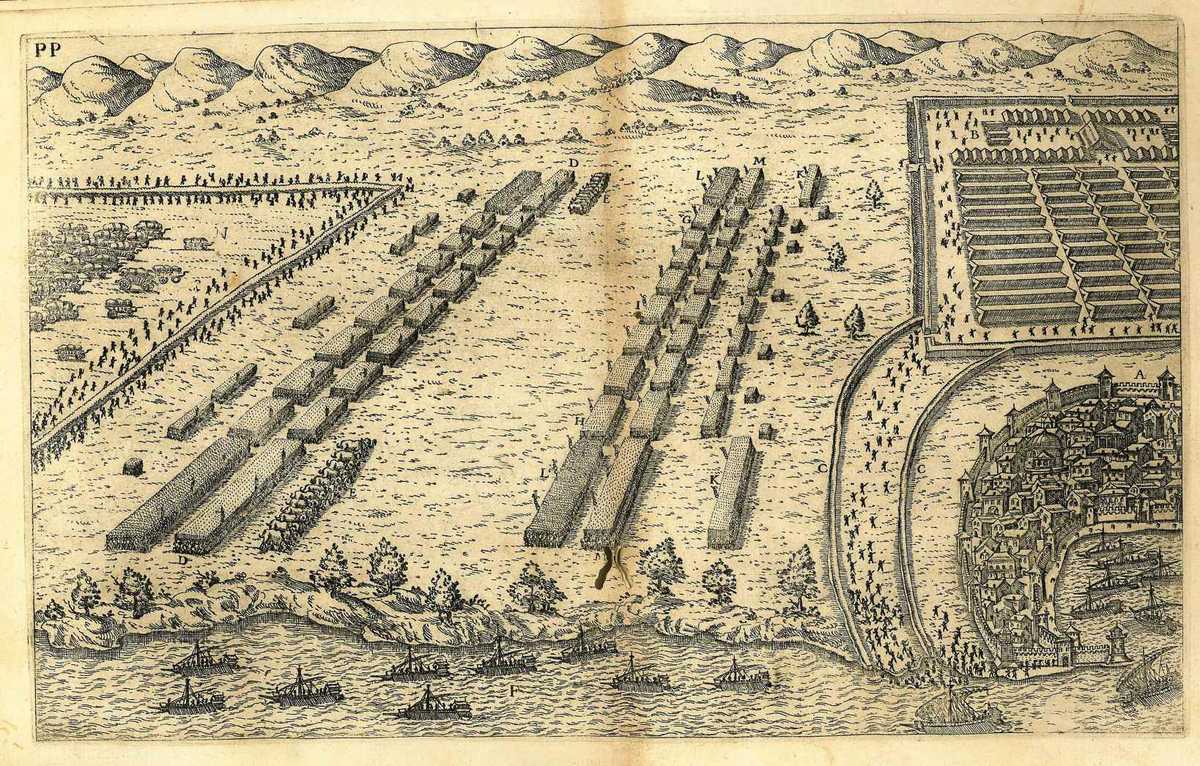
Caesar's Victory at the Battle of Thapsus
Rome
Ancient History
Military Strategy
Political Leadership
4 min read
Updated By: History Editorial Network (HEN)
Published:
Updated:
The Battle of Thapsus was a crucial conflict in the series of civil wars that marked the end of the Roman Republic. Julius Caesar faced the Pompeian forces led by Metellus Scipio. Despite suffering significant losses, with estimates suggesting that up to a third of his army was lost, Caesar managed to secure a decisive victory. This battle was pivotal as it not only demonstrated Caesar's military prowess but also solidified his position in the ongoing power struggle against the remnants of the Pompeian faction. Following the defeat at Thapsus, the Pompeian forces retreated to Hispania, where they regrouped and continued to resist Caesar's authority. However, this retreat marked a turning point in the civil war, as it allowed Caesar to consolidate his power further and pursue the remaining Pompeian forces in subsequent engagements, notably at the Battle of Munda.
The aftermath of the Battle of Thapsus had significant implications for the governance of Rome. With the defeat of the Pompeians, Caesar sought to establish undisputed control over the Roman government. He assumed multiple roles, including dictatorship and tribunate, while alternating between consulship and proconsulship. This concentration of power laid the groundwork for the transition from the Roman Republic to the imperial system that would follow. The powers Caesar granted himself during this period were later adopted by his successors, fundamentally altering the structure of Roman governance and leading to the establishment of the Roman Empire. The events surrounding the Battle of Thapsus thus played a critical role in shaping the future of Rome and its political landscape.
#mooflife
#MomentOfLife
#Caesar
#BattleOfThapsus
#RomanRepublic
#PompeianForces
#CivilWar
Primary Reference
Battle of Thapsus

Explore the Life Moments of
 AI Twin