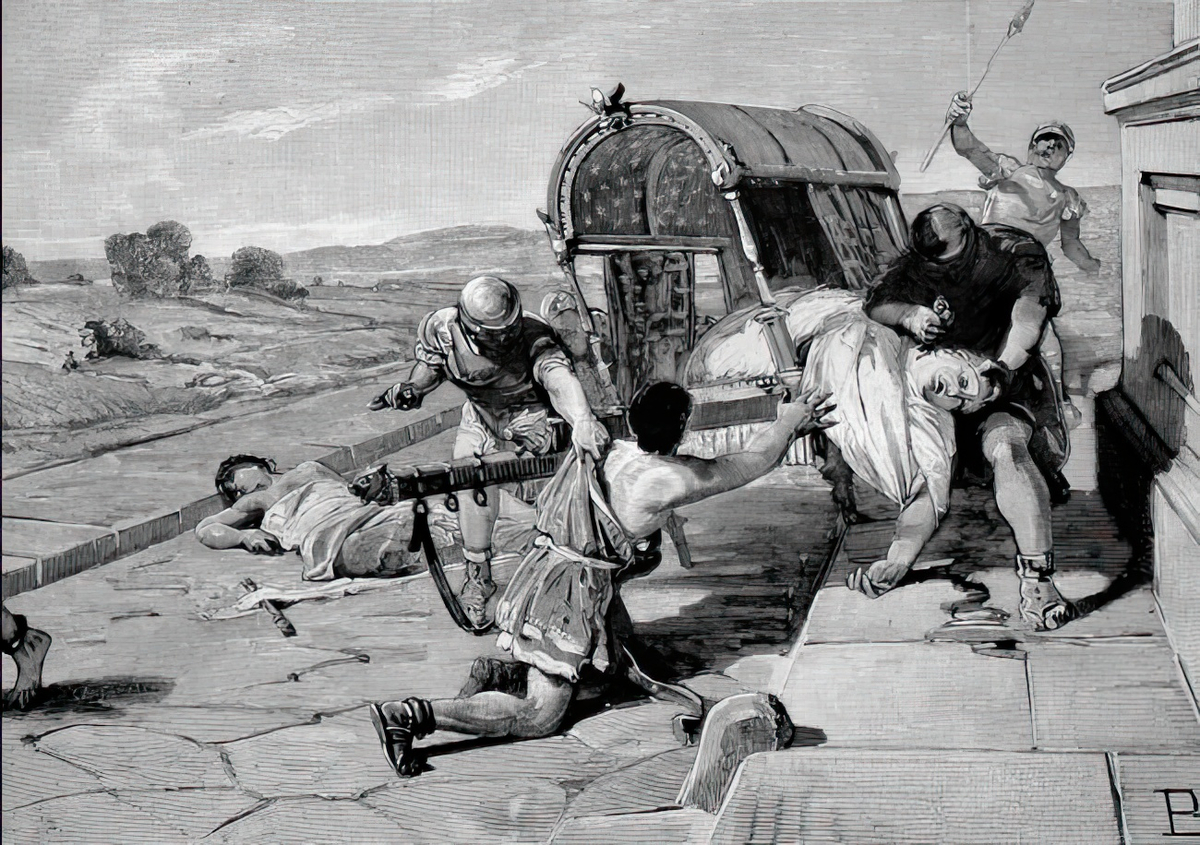
Assassination of Marcus Tullius Cicero
Rome
Roman History
Political Theory
Philosophy
4 min read
Updated By: History Editorial Network (HEN)
Published:
Updated:
Marcus Tullius Cicero, a prominent Roman statesman, orator, and philosopher, was assassinated during a period of intense political turmoil in Rome. His opposition to the rise of dictatorial powers, particularly against figures like Julius Caesar and later Mark Antony, positioned him as a key defender of the Roman Republic. Cicero's political career was marked by his efforts to uphold republican ideals and resist autocratic rule. His extensive writings, including speeches and philosophical treatises, have significantly influenced Western political thought and rhetoric. The assassination of Cicero was part of a broader conflict following the power struggles that ensued after Caesar's assassination. Cicero's death symbolized the decline of the republican ideals he championed and the rise of autocratic governance in Rome. His legacy continues to resonate in discussions of democracy and governance, highlighting the importance of civic responsibility and the dangers of concentrated power.
The impact of Cicero's assassination extended beyond his immediate political environment. It represented a critical turning point in Roman history, as it underscored the fragility of the Republic amidst the growing power of individuals like Mark Antony and Octavian. Following Cicero's death, the political landscape of Rome shifted dramatically, leading to the eventual establishment of the Roman Empire. Cicero's writings, particularly his letters and philosophical works, have been studied for centuries, providing insights into the political dynamics of his time and the principles of justice and governance. His commitment to the Republic and his articulate opposition to tyranny have made him a lasting figure in the annals of political philosophy, serving as a reminder of the ongoing struggle between liberty and authority.
#mooflife
#MomentOfLife
#Cicero
#RomanRepublic
#Assassination
#PoliticalPhilosophy
#Dictatorship

Explore the Life Moments of
 AI Twin