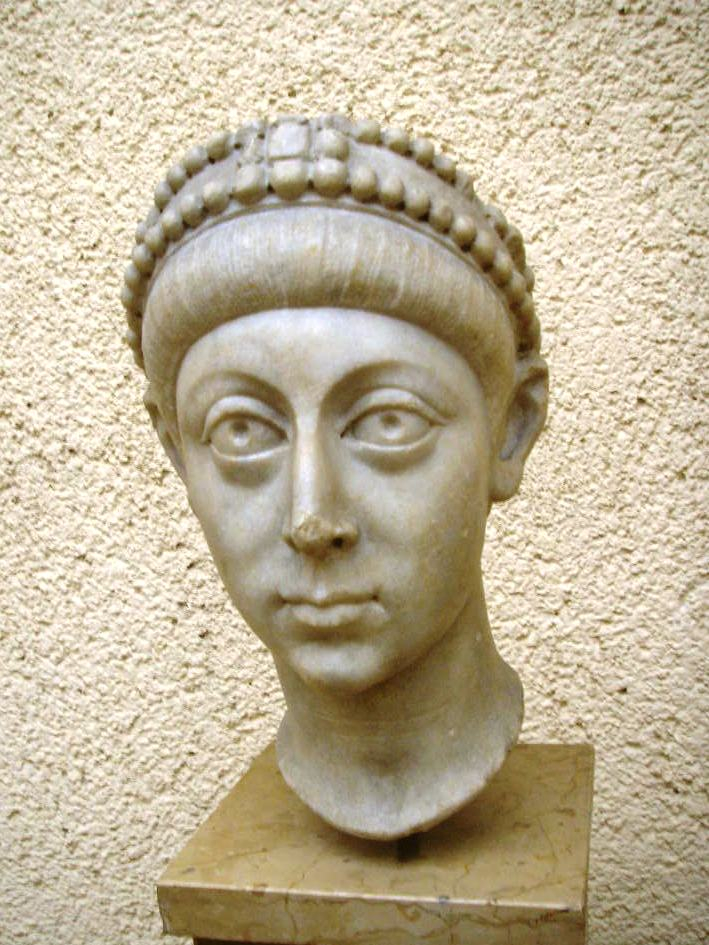
Elevation of Arcadius to Augustus
Rome
Politics
Roman Empire
6 min read
Updated By: History Editorial Network (HEN)
Published:
Updated:
The elevation of Arcadius to the rank of Augustus took place on 19/01/383 in Constantinople, when Emperor Theodosius I proclaimed his young son as co-emperor of the Roman Empire. At approximately five years old, Arcadius became a symbolic and political partner in imperial rule, marking a deliberate step toward dynastic continuity within the late Roman state.
This elevation formed part of Theodosius I’s broader effort to establish a hereditary ruling line, later known as the Theodosian dynasty. During much of the 3rd and early 4th centuries, emperors had often risen through military acclamation rather than family succession. By contrast, Theodosius sought to secure stability through lineage, ensuring that power would pass directly to his heirs. Arcadius’s promotion to Augustus, rather than the lower rank of Caesar, reinforced his status as a legitimate co-ruler from an early age.
The ceremony coincided with Theodosius I’s quinquennalia, marking the fifth anniversary of his reign since becoming emperor in 379. Such anniversaries were traditionally celebrated with public ceremonies, games, and imperial generosity, making the timing significant in reinforcing both political authority and public legitimacy. The presence of the imperial court in Constantinople underscored the city’s growing role as a central seat of power in the Eastern Roman Empire.
Contemporary coinage issued during this period reflected the ideological messaging behind Arcadius’s elevation. Coins frequently depicted the Manus Dei, or “Hand of God,” extending from above to place a diadem on the young emperor’s head. This imagery conveyed the concept of divine sanction, suggesting that Arcadius’s authority was not only inherited but also endorsed by a higher power. Such representations aligned with the increasing integration of Christian symbolism into imperial propaganda during the late 4th century.
Arcadius would later become the sole ruler of the Eastern Roman Empire after the death of Theodosius I on 17/01/395, while his younger brother Honorius governed the Western half. This arrangement formalized the division of the empire into two separate administrations, a structure that remained in place for the remainder of Roman history.
Why This Moment Matters:
The elevation of Arcadius as Augustus in 383 AD established a dynastic precedent that directly influenced the succession after Theodosius I’s death in 395, contributing to the lasting political separation between the Eastern and Western Roman Empires.
#RomanEmpire #Arcadius #TheodosiusI #AncientHistory #ByzantineEmpire #383AD
#mooflife
#MomentOfLife
#Arcadius
#Theodosius
#RomanEmpire
#Augustus
#ImperialSuccession
Primary Reference
Arcadius

Explore the Life Moments of
 AI Twin