Exploring the Themes and Impact of A Further Range by Robert Frost
New York, United States
Literature
Poetry
Analysis
4 min read
Updated By: History Editorial Network (HEN)
Published:
Updated:
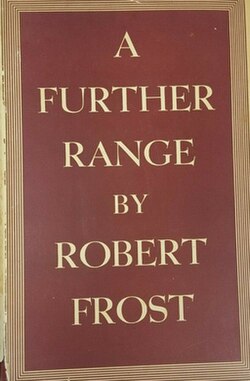
Published in 1936 by Henry Holt and Company, A Further Range became Robert Frost’s sixth major poetry collection and introduced a broader thematic direction in his mid career work. The volume followed West-Running Brook (1928) and appeared after Frost had already received two Pulitzer Prizes. While the collection retained elements of rural New England imagery and conversational verse, many poems explored subjects beyond pastoral life, including reflections on government, religion, individual freedom, and social change. The title itself suggested a widening of Frost’s poetic concerns into areas of public and philosophical commentary.
The collection included a mix of shorter lyrics and longer reflective poems, some of which adopted a satirical or observational tone. Frost continued to employ traditional meter and accessible language, but the subject matter often moved toward broader cultural issues and moral questions. These poems reflected a period in the mid 1930s when economic hardship and political uncertainty shaped public discourse in the United States. Through these works, Frost expanded his approach while maintaining stylistic continuity with his earlier poetry.
In 1937, A Further Range was awarded the Pulitzer Prize for Poetry, marking Frost’s third Pulitzer honor after wins in 1924 and 1931. The recognition reinforced the collection’s place within his evolving body of work and documented his continued prominence in American literary life during the 1930s. The publication and subsequent award positioned A Further Range as a transitional volume between Frost’s earlier pastoral emphasis and the more philosophical tone of his later collections.
#RobertFrost
#AFurtherRange
#PulitzerPrize
#AmericanPoetry
# LiteraryHistory
Primary Reference
A Further Range

Explore the Life Moments of
 AI Twin