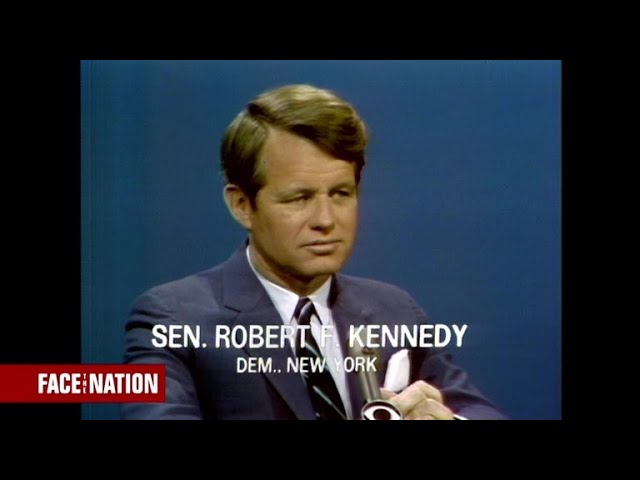
Robert F. Kennedy Criticizes Johnson's Vietnam Policy: A Turning Point in American Politics
United States of America
Political
4 min read
Updated By: History Editorial Network (HEN)
Published:
Updated:
During an appearance on Face the Nation, Robert F. Kennedy publicly criticized President Lyndon B. Johnson's policy on Vietnam, labeling the United States' stance as "immoral." Kennedy's condemnation of the administration's approach marked a notable moment in American politics. His critique highlighted a severe divergence within the Democratic Party, amidst increasing national discontent over the Vietnam War.
Kennedy's argument was based on the growing casualties, civilian suffering, and the impact on American soldiers. By this time, opposition against the war was mounting, with significant protests emerging across the nation. According to official reports, more than 16,000 American military personnel had already lost their lives, with countless Vietnamese casualties, including civilians, suffering in the conflict.
The conflict in Vietnam had escalated with the Gulf of Tonkin Resolution, leading to a significant increase in U.S. military involvement. Kennedy's stance resonated with many Americans who were beginning to view the war as a moral blunder and a strategic misstep. His comments drew widespread attention, putting immense pressure on the Johnson administration to reconsider its strategy in Vietnam.
Kennedy's position also signaled a potential shift in the Democratic Party's approach to foreign policy, suggesting an increasing alignment with the growing peace movement within the United States. The implications of his critique played a crucial role in shaping subsequent political discourse and strategies among both policymakers and the public.
#VietnamWar #USHistory #RobertFKennedy #ForeignPolicy #PoliticalDissent #HistoricalImpact #AmericanPolitics #MoofLife
Primary Reference
Lyndon B. Johnson: Foreign Affairs | Miller Center
Explore the Life Moments of
 AI Twin