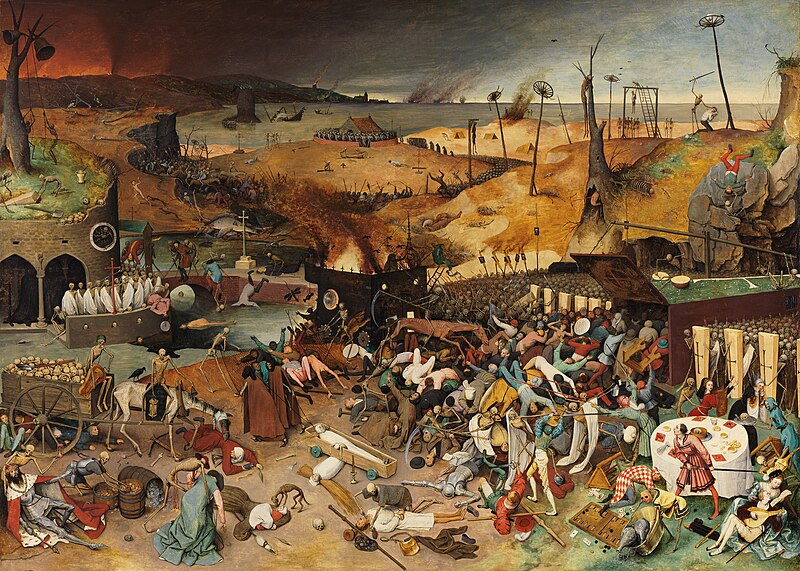
Pieter Bruegel's The Triumph of Death
Italy
Art History
Renaissance Art
Social Commentary
4 min read
Updated By: History Editorial Network (HEN)
Published:
Updated:
Pieter Bruegel the Elder's painting, The Triumph of Death, serves as a poignant reflection of the societal impact following the Black Death. Created around 1562, this artwork captures the pervasive fear and chaos that characterized the period. The painting illustrates a landscape filled with skeletal figures, symbolizing death's omnipresence, as it ravages communities and disrupts daily life. The imagery conveys a stark message about mortality and the inevitability of death, resonating with a populace that had experienced profound loss and suffering due to the plague. The depiction of death as a relentless force serves to remind viewers of the fragility of existence, a theme that was particularly relevant in a time when the population was still grappling with the aftermath of the pandemic.
The Triumph of Death not only reflects the emotional and psychological state of society but also highlights the broader cultural shifts that occurred in the wake of the Black Death. The painting can be seen as part of a larger movement in art that began to focus on human experiences and the realities of life, rather than solely on spiritual themes. This shift was influenced by the widespread devastation caused by the plague, which led to a reevaluation of life and death. The artwork has been interpreted as a commentary on the futility of earthly pursuits in the face of death, urging viewers to confront their mortality. The impact of Bruegel's work extends beyond its immediate visual appeal; it invites contemplation on the human condition and the societal changes that emerged in response to one of history's deadliest pandemics.
#mooflife
#MomentOfLife
#PieterBruegel
#TheTriumphOfDeath
#BlackDeath
#ArtHistory
#Mortality

Explore the Life Moments of
 AI Twin