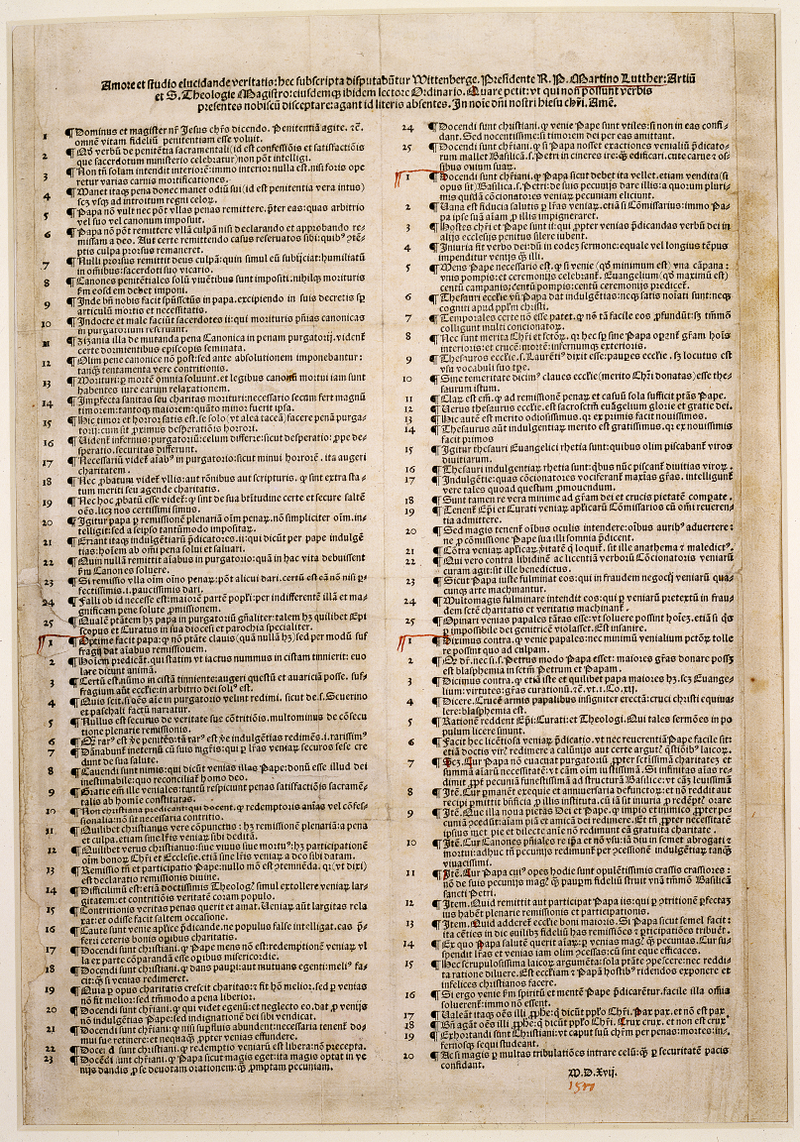
Martin Luther publishes Ninety-five Theses
Italy
Religious History
Reformation Studies
Church and Society
4 min read
Updated By: History Editorial Network (HEN)
Published:
Updated:
Martin Luther's publication of the Ninety-five Theses marked a pivotal moment in religious history. The document was a direct challenge to the authority of the papacy and addressed the widespread corruption within the Roman Catholic Church, particularly focusing on the sale of indulgences. Indulgences were payments made to the Church that were believed to reduce punishment for sins, a practice that many, including Luther, viewed as exploitative and contrary to the teachings of Christianity. Luther's Theses outlined his objections and called for a return to a more authentic interpretation of the Bible, emphasizing faith and scripture over Church traditions and practices. This act of defiance resonated with many who were disillusioned with the Church's practices, leading to a growing movement for reform.
The impact of the Ninety-five Theses was profound, as it catalyzed the Protestant Reformation, which resulted in a significant schism within Christianity. The Reformation led to the establishment of various Protestant denominations and challenged the Catholic Church's dominance in Western Europe. It also prompted a series of theological debates and conflicts that would shape the religious landscape for centuries. The spread of Luther's ideas was facilitated by the invention of the printing press, which allowed for rapid dissemination of his writings. As a result, the Ninety-five Theses not only transformed religious practices but also influenced social, political, and cultural developments across Europe, laying the groundwork for modern concepts of individual faith and the separation of church and state.
#mooflife
#MomentOfLife
#MartinLuther
#Ninety-fiveTheses
#ProtestantReformation
#CatholicChurch
#Indulgences

Explore the Life Moments of
 AI Twin