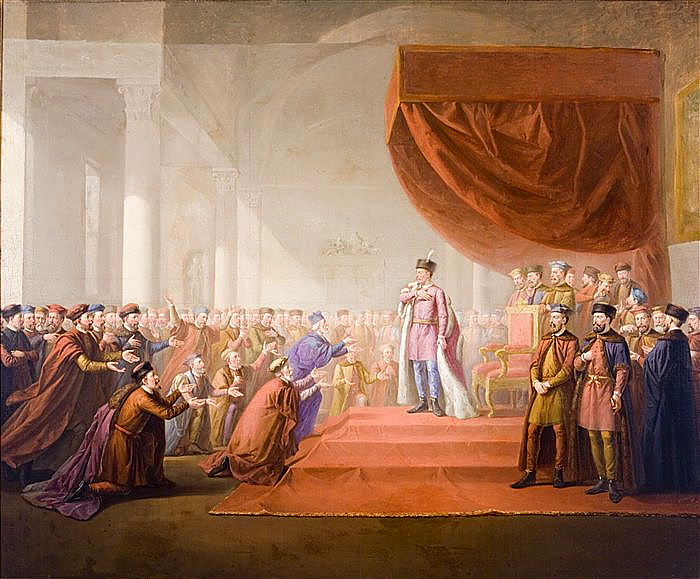
Founding of the University of Vilnius
Italy
Religion
Reformation
3 min read
Updated By: History Editorial Network (HEN)
Published:
Updated:
The spread of the Reformation in Eastern Europe was influenced by various factors, including the rise of strengthened monarchies and the establishment of universities. In the Polish state, the Renaissance marked a significant cultural growth period, characterized by a century of relative peace, which allowed for advancements in education and the arts. The founding of the Vilnius Academy in 1579 played a crucial role in this educational expansion, providing a platform for the dissemination of Reformation ideas. The academy became a center for learning and intellectual exchange, contributing to the spread of Protestant thought in the region.
The impact of the Reformation in Eastern Europe was profound, as it challenged the Catholic Church's authority and introduced new theological perspectives. The movement gained traction among various social classes, leading to the establishment of Protestant communities. The interaction between the Reformation and local cultures resulted in a unique blend of religious practices and beliefs. Additionally, the political landscape of Eastern Europe, marked by the ambitions of local rulers and the influence of neighboring states, further facilitated the spread of Reformation ideas. The combination of educational advancements, political support, and cultural exchanges significantly shaped the religious landscape of Eastern Europe during this transformative period.
#mooflife
#MomentOfLife
#Reformation
#EasternEurope
#PolishRenaissance
#VilniusAcademy
#Protestantism

Explore the Life Moments of
 AI Twin