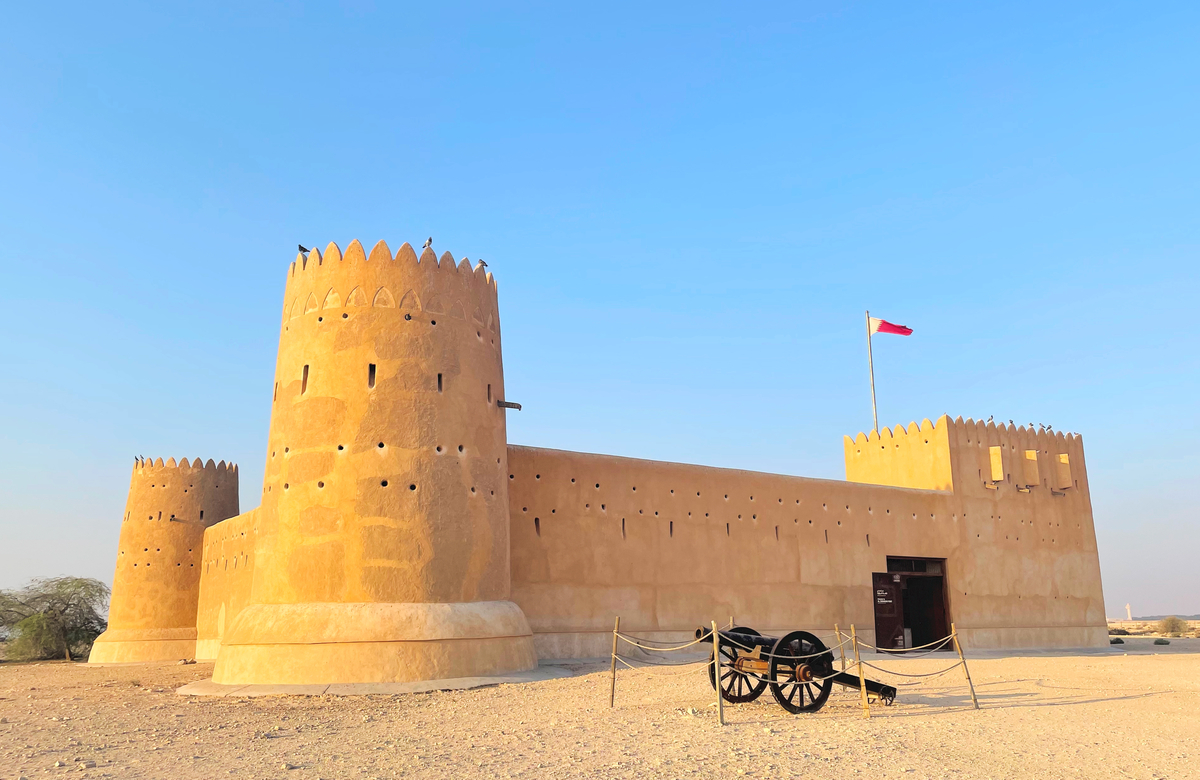
Building Zubarah Fort: Historic significance and architectural importance.
Qatar

Cultural Heritage Architecture
5 min read
Updated By: History Editorial Network (HEN)
Published:
In the mid-20th century, Qatar witnessed an event that marked a cornerstone in its architectural and historical timeline: the construction of Zubarah Fort. Located on the northwestern coast of the Qatar Peninsula, the fort was built under the directive of Sheikh Abdullah bin Jassim Al Thani, the then ruler of Qatar. The purpose was to serve both as a coast guard station and a police post, reflecting the need to establish a more secure environment and asserting territorial control over the region.
The construction of Zubarah Fort was instigated at a time when Qatar was transitioning from its pearl diving economy to embracing oil exploration and other modern industries. This period was marked by strategic advancements and infrastructural developments, laying the groundwork for the country's future growth. The fort itself was built on the ruins of an older, smaller fortification, symbolizing a renewal and courageous step forward in establishing a solidified Qatari presence in the area.
The fort was not just a military installation but also served as a hub for the local community. It played a crucial role in safeguarding the vital trading town of Al Zubarah, which had been one of the foremost trading hubs in the Persian Gulf region. The architecture of the fort was reflective of traditional Arabian military designs of the time, featuring tall, fortified walls, strategically placed watchtowers, and gunfire holes. These defensive measures underscored the practical necessities of the era while contributing to the fort's endurance as an enduring symbol of Qatari heritage.
As the years passed, Zubarah Fort came to be recognized not only for its strategic importance but also as a cultural touchstone, encapsulating an integral chapter in the narrative of Qatar. While the surrounding town of Al Zubarah eventually succumbed to the sands of time, the fort remains a well-preserved monument. It stands as a testament to the country's rich history and its journey from a humble pearling economy to an influential energy powerhouse in the Gulf.
Today, Zubarah Fort is a UNESCO World Heritage Site and attracts numerous visitors, scholars, and tourists interested in the archaeology and history of the region. The fort's preservation and its role in education signify its lasting legacy in the collective memory of Qatar.
#Qatar #ZubarahFort #CulturalHeritage #HistoricalArchitecture #MoofLife

Explore the Life Moments of
 AI Twin