Spanish Expedition Occupies Chincha Islands Amid Increased Guano Export Revenues
Peru
Economics
Colonialism
3 min read
Updated By: History Editorial Network (HEN)
Published:
Updated:
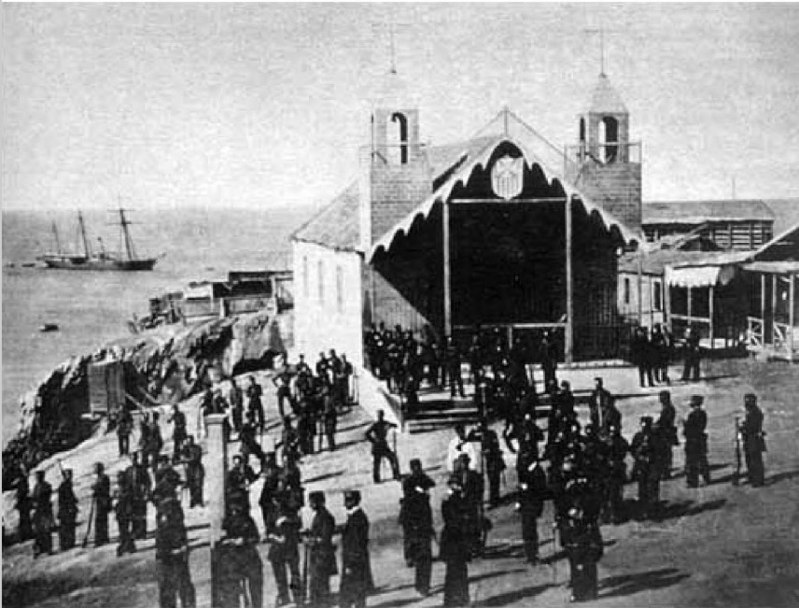
In 1864, the Spanish expedition occupied the Chincha Islands, which were significant producers of guano, a valuable fertilizer that had become a major export for Peru. This occupation sparked an international incident that had profound implications for Peruvian politics, culminating in a coup d'état against President Juan Antonio Pezet. The situation escalated as Peru, supported by Bolivia, Chile, and Ecuador, declared war on Spain. The conflict reached a critical point during the Battle of Callao on May 2, 1866, where the Spanish Navy ultimately withdrew from Peru. Following this period of turmoil, the government of José Balta focused on ambitious infrastructure projects, including the construction of the Central Railway. However, the early signs of excessive government spending began to emerge, foreshadowing future economic challenges. By the 1870s, the depletion of guano resources left Peru heavily indebted, and political instability resurfaced, leading to further internal strife. This historical episode highlights the intersection of international relations and domestic politics in 19th-century Peru, illustrating how external conflicts can significantly influence internal governance and economic stability.

Explore the Life Moments of
 AI Twin