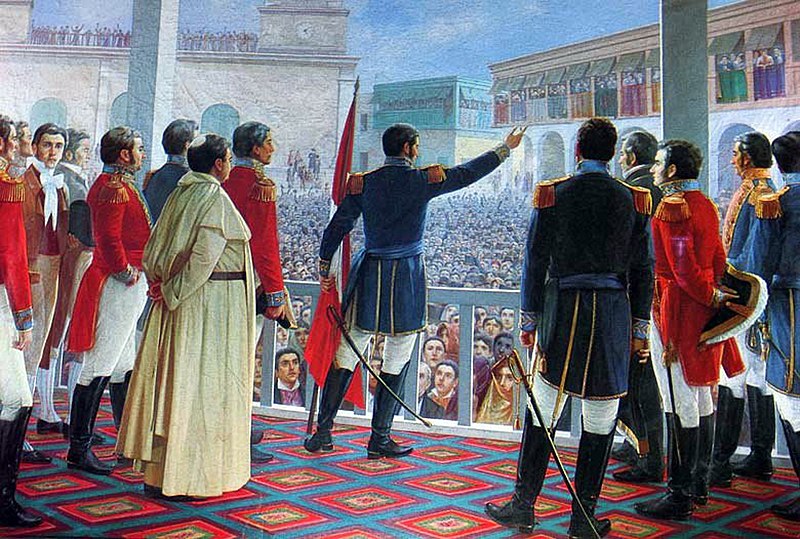
Peruvian Independence Declared by José de San Martín
Peru
South American History
Independence Movements
Military Campaigns
3 min read
Updated By: History Editorial Network (HEN)
Published:
Updated:
In the early 19th century, Peru was a royalist stronghold amidst the wave of independence sweeping across South America. The elite, torn between loyalty to the Spanish Crown and the push for emancipation, delayed the declaration of independence. José de San Martín, after liberating Argentina and Chile, turned his attention to Peru. On September 7, 1820, he arrived in Paracas with a fleet and began a campaign to liberate the country. Despite initial diplomatic efforts to negotiate independence with the Viceroy of Peru, José de la Serna, San Martín faced resistance. However, internal power struggles within the loyalist ranks facilitated his advance. On July 12, 1821, San Martín occupied Lima and declared Peruvian independence on July 28, 1821, creating the first Peruvian flag. This pivotal moment marked the beginning of a new national identity for Peru, although Upper Peru (now Bolivia) remained under Spanish control until liberated by Simón Bolívar in 1824. San Martín's leadership and vision were crucial in shaping the early years of the Peruvian Republic, despite the subsequent political instability that followed.

Explore the Life Moments of
 AI Twin