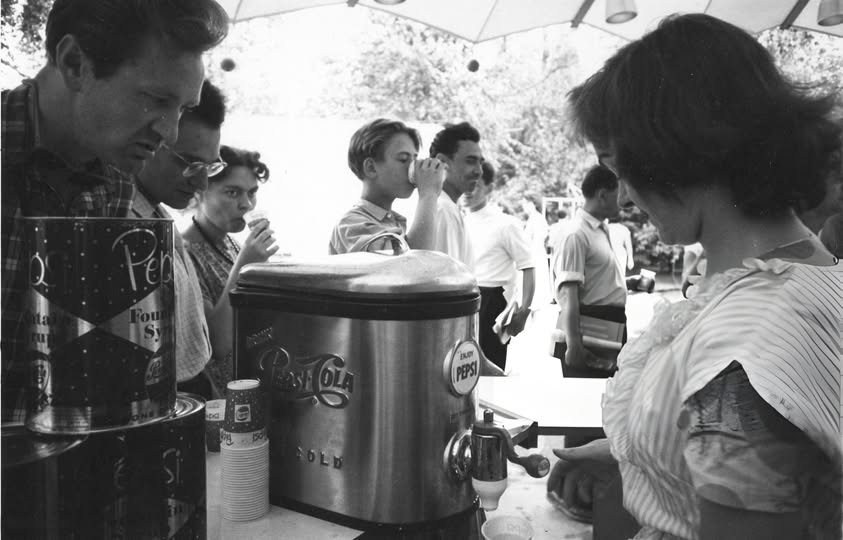
Pepsi Cola Exhibited in Moscow
United States of America
Marketing History
Cold War Era
International Business
4 min read
Updated By: History Editorial Network (HEN)
Published:
Updated:
In the context of the Cold War, the exhibition in Sokolniki Park, Moscow, served as a platform for cultural exchange between the United States and the Soviet Union. This event was a reciprocal initiative following the USSR's exhibition in New York, which highlighted Soviet technology and culture. Among the various American products displayed, Pepsi Cola stood out as a symbol of American consumer culture. The presence of Pepsi Cola at this exhibition was not merely about showcasing a beverage; it represented a broader narrative of American capitalism and its appeal to the Soviet populace. The exhibition attracted significant attention, particularly due to a notable photograph of then-US Vice President Richard Nixon and Soviet Premier Nikita Khrushchev enjoying Pepsi together. This image became iconic, illustrating a moment of cultural diplomacy amidst the political tensions of the era.
The impact of Pepsi Cola's exhibition in Moscow extended beyond mere visibility. It marked the beginning of Pepsi's efforts to penetrate the Soviet market, which was largely untapped at the time. The image of Nixon and Khrushchev drinking Pepsi was widely circulated, contributing to the brand's recognition in the Soviet Union. This event laid the groundwork for PepsiCo's future marketing strategies in Eastern Europe, where the company would later establish a significant presence. The exhibition not only highlighted the competition between American and Soviet ideologies but also showcased how consumer products could serve as tools for soft power. The successful introduction of Pepsi Cola in the Soviet Union reflected changing consumer preferences and the complexities of international relations during the Cold War, ultimately leading to a unique intersection of culture and commerce.
#mooflife
#MomentOfLife
#PepsiCola
#MoscowExhibition
#ColdWar
#CulturalExchange
#ConsumerCulture

Explore the Life Moments of
 AI Twin