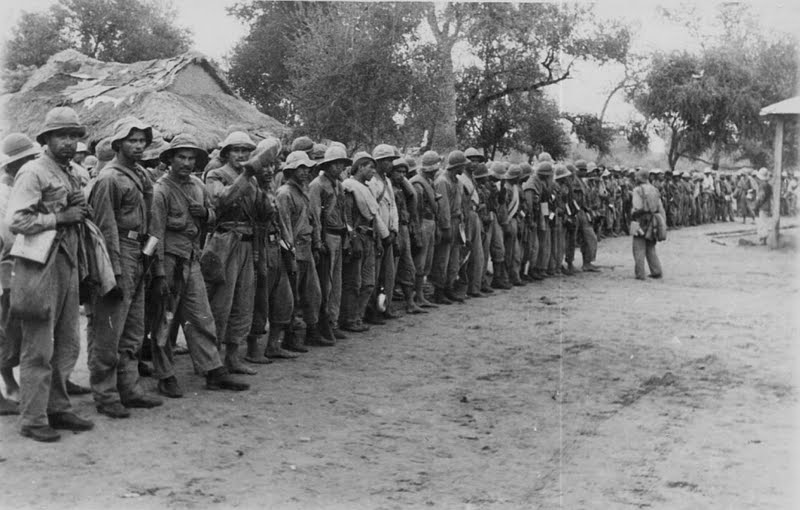
The Chaco War: Conflict with Bolivia over Gran Chaco
Paraguay

International Relations
Military Conflict
4 min read
Updated By: History Editorial Network (HEN)
Published:
Updated:
The Chaco War (1932–1935) was a brutal conflict fought between Paraguay and Bolivia over control of the Gran Chaco, a vast, sparsely populated region believed to hold valuable oil reserves. Tensions had been building for decades as both nations laid claim to the territory, with border skirmishes escalating into full-scale war in June 1932. Bolivia, with a larger army and better equipment, initially appeared stronger, but Paraguay, under the leadership of José Félix Estigarribia, capitalized on superior tactics, knowledge of the terrain, and high troop morale.
The war was characterized by extreme conditions, including intense heat, water shortages, and harsh jungle warfare. Paraguay achieved significant victories early on, capturing key Bolivian forts such as Boquerón (September 1932) and Nanawa (July 1933). Bolivia, despite its larger force, struggled with logistical failures and internal instability, leading to heavy losses. By 1934, Paraguayan forces had pushed deep into Bolivian territory, forcing Bolivia into retreat. With the war becoming unsustainable for both sides, peace negotiations began in 1935, culminating in a ceasefire on June 12, 1935.
The war officially ended with the Treaty of Buenos Aires in 1938, granting Paraguay control over most of the disputed Chaco region. Despite its territorial gain, Paraguay suffered enormous casualties and economic devastation, while Bolivia faced political upheaval. The Chaco War remains one of South America's deadliest conflicts, remembered for its intense battles, harsh conditions, and the resilience of both nations' soldiers.
#ChacoWar #ParaguayVsBolivia #SouthAmericanWars #JoséFélixEstigarribia #Boquerón #Nanawa #HistoryOfParaguay #MomentsOfLife #MoofLife

Explore the Life Moments of
 AI Twin