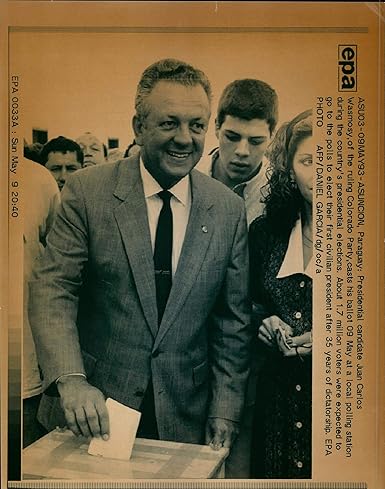
Juan Carlos Wasmosy's Election as Paraguay's First Civilian President
Paraguay

Politics
Human Rights
4 min read
Updated By: History Editorial Network (HEN)
Published:
Updated:
On February 3, 1989, Paraguay witnessed a significant turning point in its history with the overthrow of long-time dictator Alfredo Stroessner in a military coup led by General Andrés Rodríguez. This event marked the end of a 35-year regime characterized by repression and human rights abuses. Following the coup, Rodríguez implemented a series of political, legal, and economic reforms aimed at stabilizing the nation and fostering relations with the international community. One of the most notable outcomes of this transition was the urgent land reform movement, as the rural poor, who had long suffered from landlessness, began to occupy vast tracts of land previously owned by Stroessner and his associates. By mid-1990, approximately 19,000 families had claimed around 340,000 acres (138,000 hectares) of land. This movement highlighted the pressing need for land redistribution in a country where over half of the 4.1 million population lived in rural areas, many without access to land. The political landscape continued to evolve, culminating in the adoption of a new constitution in June 1992 that established a democratic government and enhanced the protection of human rights. The first civilian president elected in nearly four decades, Juan Carlos Wasmosy of the Colorado Party, took office in May 1993, marking a new era for Paraguay characterized by democratic governance and social reform.
#Mooflife #Mof #MomentOfLife #Paraguay #AlfredoStroessner #AndrésRodríguez #MilitaryCoup #LandReform

Explore the Life Moments of
 AI Twin