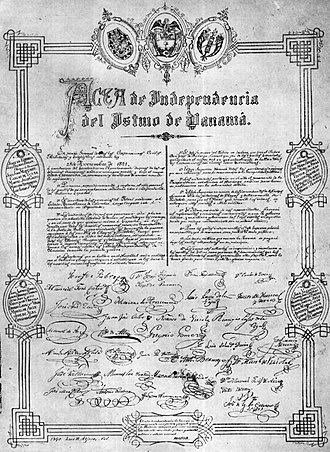
Panama's Independence and Joining the Central American Isthmus
Panama
Independence
Central America
3 min read
Updated By: History Editorial Network (HEN)
Published:
Updated:
Panama's declaration of independence was a pivotal event in the context of the broader ambitions of Gran Colombia, a federation envisioned by Simón Bolívar. The region's strategic location as a central interoceanic traffic zone made it a focal point for trade and military interests. The City of Panama, historically significant to the Spanish Empire, had been a site of contention due to its economic and social disparities. The Azuero region, known for its liberal stance, contrasted sharply with the conservative and royalist sentiments prevalent in Veraguas. This division in loyalties became evident during the Grito de la Villa de Los Santos, where Veraguas opposed the independence movement, highlighting the internal conflicts that characterized the region's struggle for autonomy. Following its independence, Panama joined the southern federation, aligning itself with the other Central American states in a bid for greater political and economic integration. This move not only marked a shift in Panama's political landscape but also set the stage for future developments in Central American unity and regional dynamics.
#mooflife
#MomentOfLife
#PanamaIndependence
#GranColombia
#CentralAmerica
#HistoricalSignificance
#InteroceanicTrade

Explore the Life Moments of
 AI Twin