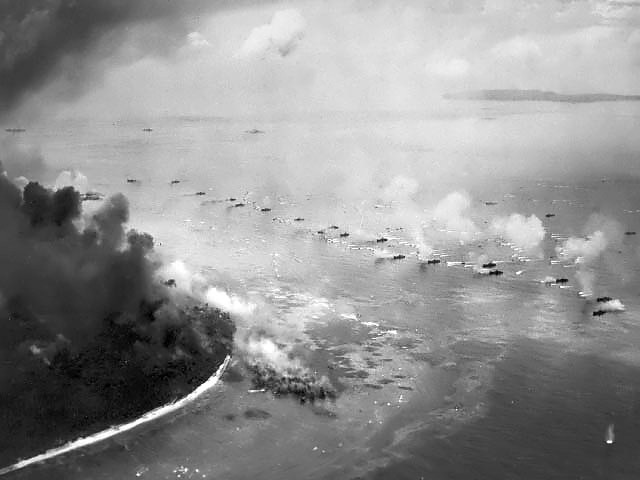
The Battle of Peleliu: Strategic struggle with heavy casualties in World War II.
Palau

Military
4 min read
Updated By: History Editorial Network (HEN)
Published:
Updated:
The Battle of Peleliu was a major engagement during World War II, taking place on the island of Peleliu in the Palau archipelago. The battle was part of the larger strategy of the Allied forces to secure the Mariana and Palau Islands. The main objective was to capture an airstrip on the island to support future operations in the Pacific Theater.
U.S. forces, primarily consisting of the 1st Marine Division, faced strong resistance from the Japanese defenders. The Japanese had fortified the island with a complex network of bunkers, caves, and underground positions, making the terrain extremely difficult to navigate and secure. The battle quickly turned into a grueling and brutal conflict, characterized by intense combat and high casualties on both sides.
American forces suffered approximately 2,000 fatalities and over 8,000 wounded during the battle. Japanese casualties were significantly higher, with around 10,000 soldiers killed. The high number of casualties was attributed to the determined Japanese defense and the challenging conditions faced by the attacking forces.
The capture of Peleliu was considered controversial due to the high cost in lives and the subsequent questioning of its strategic necessity. The island's value as an airstrip did not meet expectations, and the subsequent operations in the Pacific largely bypassed Peleliu.
The battle had a profound impact on the soldiers who fought there, many of whom experienced severe physical and psychological trauma. The harsh conditions, relentless combat, and high casualties left a lasting mark on the participants and influenced future military planning and tactics in the Pacific War.
#WWII #PeleliuBattle #PacificTheater #MilitaryHistory #MoofLife
Primary Reference
The Battle of Peleliu - Stephen Ambrose Historical Tours

Explore the Life Moments of
 AI Twin