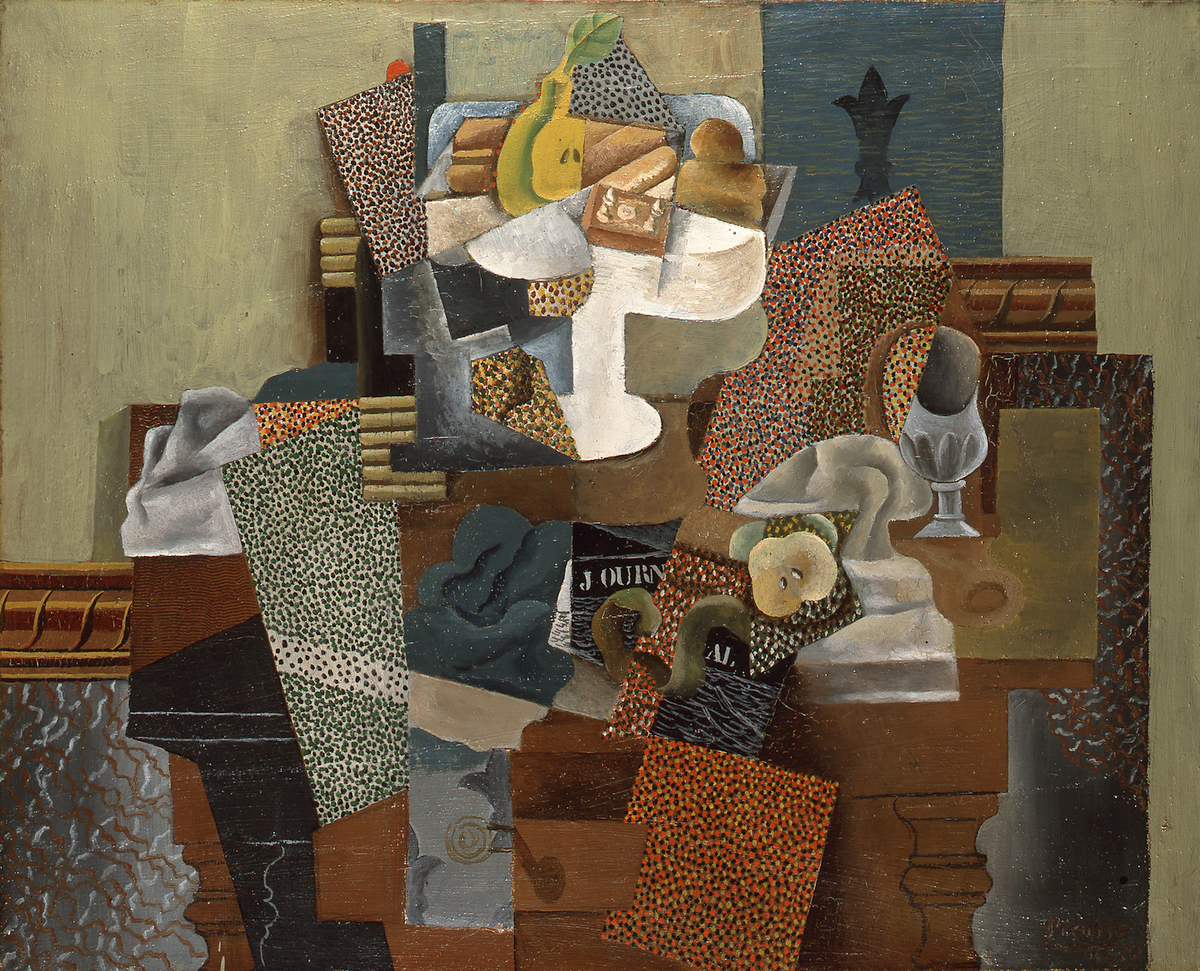
Picasso's Synthestic Cubism: "Nature morte au compotier" challenges traditions, evolves style, and broadens modern art.
Spain
Art
4 min read
Updated By: History Editorial Network (HEN)
Published:
In a period of immense artistic experimentation, Pablo Picasso created the work titled "Nature morte au compotier (Still Life with Compote and Glass)" during his time associated with the Synthetic Cubism phase. Synthetic Cubism was an important development in Picasso's career, involving simpler shapes and increased use of color compared to Analytical Cubism. This work exemplifies the transition in Picasso's artistic approach and his continuous evolution of style.
"Nature morte au compotier (Still Life with Compote and Glass)" was showcased at the Columbus Museum of Art in Ohio. The still life genre allowed Picasso to explore the relationship between objects and space, employing collage techniques and varying textures that became characteristic of his later works. This piece, in particular, displayed an abstract arrangement of everyday objects—a compote and a glass—merging elements of both painting and sculpture.
The impact of this artwork extends beyond its visual representation. It signified Picasso's shift towards integrating more mundane elements into high art, thereby challenging traditional notions of beauty and artistic representation. Furthermore, this period marked Picasso's exploration of line, form, and the two-dimensional plane, which played a crucial role in broadening the boundaries of modern art.
Picasso's contribution to the art world through this piece influenced not just his contemporaries but also paved the way for future movements such as Surrealism and Abstract Expressionism. The Columbus Museum of Art's collection of Picasso's work provides valuable insight into his experimental phase and progressive transformation as an artist.
#Cubism #PicassoArt #ColumbusMuseum #StillLife #ModernArt #MoofLife
Explore the Life Moments of
 AI Twin