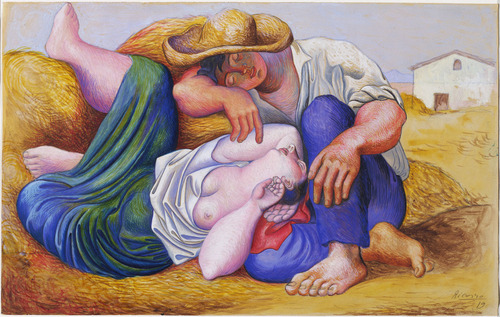
Picasso's "Painted Sleeping Peasants" exemplifies post-WWI modernist art at the MoMA.
Spain
Art Modern Art.
3 min read
Updated By: History Editorial Network (HEN)
Published:
Pablo Picasso created "Painted Sleeping Peasants" using gouache, watercolor, and pencil on paper. This artwork is part of his post-World War I period, reflecting the return to classical themes with a modernist approach. Picasso's involvement in the avant-garde movement and his ability to merge traditional and contemporary forms are evident in this piece.
"Painted Sleeping Peasants" depicts two figures, likely influenced by the rural lifestyle and the hardship observed during the war and its aftermath. The choice of medium and technique highlights Picasso’s versatility and experimentation with different forms of expression. This art piece is housed at the Museum of Modern Art, contributing to its extensive collection of groundbreaking 20th-century works. Its inclusion in the museum underscores Picasso's impact on modern art and his role in shaping the art world through innovation and exploration.
Relevant information about the broader art scene at the time includes the rise of surrealism and abstract art, with artists pushing boundaries and exploring new themes. Picasso's work stands out for its fusion of classical techniques with modernist abstraction, making "Painted Sleeping Peasants" a significant example of the artistic transformation of the era.
#ModernArt #PabloPicasso #ArtHistory #MooofLife #20thCenturyArt #AvantGarde #MuseumOfModernArt
Primary Reference
Pablo Picasso. Sleeping Peasants. 1919 | MoMA
Explore the Life Moments of
 AI Twin