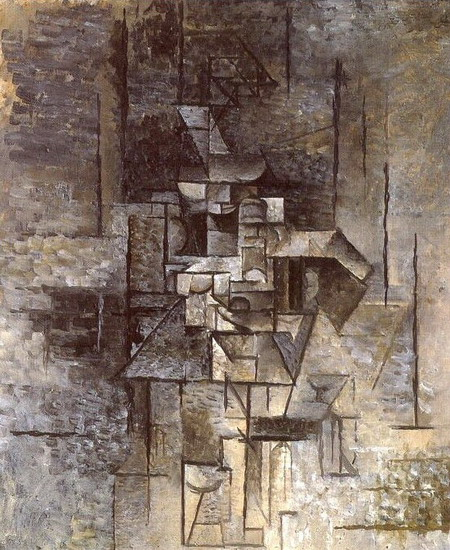
Picasso's Cubist Revolution: Transforming Modern Art with "Guitariste, La mandoliniste"
Spain
Art
Entertainment
3 min read
Updated By: History Editorial Network (HEN)
Published:
During the early 20th century, Pablo Picasso created "Guitariste, La mandoliniste," a work that stands as a prime example of his engagement with Cubism. This period saw him deconstruct traditional forms, exploring geometric simplification and the multiple perspectives in a single frame. His collaboration with Georges Braque was foundational, transforming the landscape of modern art.
In the artwork, a woman is portrayed playing a musical instrument, possibly a guitar or a mandolin. This piece exemplifies Picasso’s shift from the Blue and Rose periods to Cubism, reflecting an analytical approach to shape and form. Cubism challenged conventional perceptions by presenting fragmented objects in abstract ways, engaging viewers in reassembling the design mentally. Critics and audiences alike were prompted to rethink visual representation in art.
This shift had a significant impact on 20th-century art. Picasso's approach influenced numerous artists, bringing abstract art into mainstream appreciation. Museums and galleries worldwide began to showcase Cubist works, and sales records for Picasso’s paintings soared. This period marked an elevation in his career, solidifying his status as a leader in avant-garde art. His efforts contributed to redefining artistic standards, prioritizing conceptual understanding over traditional aesthetics.
#ArtRevolution #Cubism #Picasso #ModernArt #MusicInArt #MuseumLife #MoofLife
Primary Reference
File:Pablo Picasso, 1910-11, Guitariste, La mandoliniste, Woman ...
Explore the Life Moments of
 AI Twin