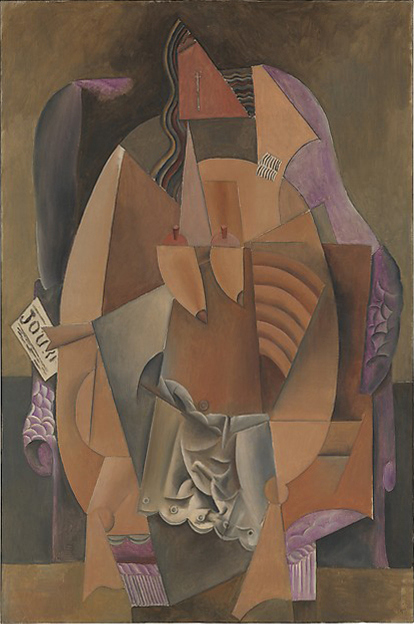
Picasso's Cubist masterpiece: "Femme assise dans un fauteuil (Eva)".pyplot
Spain
Art
Cultural Movement
4 min read
Updated By: History Editorial Network (HEN)
Published:
Pablo Picasso completed "Femme assise dans un fauteuil (Eva)" during a period when his artistic focus was heavily influenced by Cubism. This painting, housed in the Metropolitan Museum of Art in New York, depicts Eva Gouel, Picasso’s significant other at the time. The artwork is a striking representation of his analytical Cubism phase, characterized by fragmented and abstracted forms.
During this period, Picasso and his contemporaries, such as Georges Braque and Juan Gris, were radically reinterpreting visual perspectives. The impact of this movement on the art world was profound. Traditional notions of perspective and form were being challenged, and Picasso's work epitomized this disruption. Cubism sought to portray subjects from multiple angles simultaneously, and "Femme assise dans un fauteuil (Eva)" is a prime example of this methodology.
Cultural circles in Europe and America were abuzz with discussions about these avant-garde techniques. Art collectors, critics, and museums gradually began to accept and even celebrate these works, marking a major shift in the art historical canon. Picasso’s exploration of geometry and abstraction in this painting, especially in the portrayal of the human figure, had a ripple effect, influencing not just artists but also affecting the broader cultural attitudes toward modern art. The Metropolitan Museum of Art acquired the painting as a testament to this pivotal era in art history.
"Femme assise dans un fauteuil (Eva)" serves as a bridge between the past and the future of painting, encapsulating the dynamism of early 20th-century art. This piece continues to inspire discussions about form, viewer perception, and the nature of artistic representation.
#Picasso #Cubism #ModernArt #MetMuseum #EvaGouel #ArtHistory #MoofLife
Primary Reference
Pablo Picasso - The Metropolitan Museum of Art
Explore the Life Moments of
 AI Twin