Picasso's Anti-Fascist Postcards: Artistic Resistance During the Spanish Civil War
Spain

Political
Art
3 min read
Updated By: History Editorial Network (HEN)
Published:
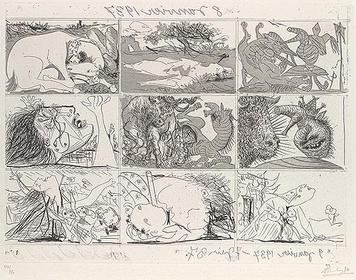
Amid the Spanish Civil War, artist Pablo Picasso responded to the escalating brutality and repression of Francisco Franco's forces by creating 'The Dream and Lie of Franco.' This political work consisted of a series of etchings that depicted the horrors and absurdities of fascism. Realizing the potential of art as a tool for social messaging and fundraising, Picasso decided to sell these etchings as postcards.
The proceeds were directed to support the Spanish Republic, the legitimate government struggling against Franco's insurgency. By transforming his artwork into a medium for public engagement, Picasso not only disseminated a powerful anti-fascist message but also contributed materially to the Republican cause. These postcards became an effective method of raising awareness internationally about the conflict in Spain. The series is characterized by its grotesque imagery, alternating between surreal satire and stark violence, encapsulating the artist's condemnation of fascist atrocities.
Picasso's initiative mirrors the larger trend of artists and intellectuals rallying against fascism during this period. His work served both as a cultural artifact and a piece of wartime propaganda. The impact of 'The Dream and Lie of Franco' extended beyond immediate fundraising, stimulating political discourse around the moral and ethical responsibilities of artists amid conflict.
#ArtAsResistance #PoliticalArt #Picasso #SpanishCivilWar #MoofLife
Primary Reference
Exhibition in Defense of World Democracy: Dedicated to the ...
Explore the Life Moments of
 AI Twin