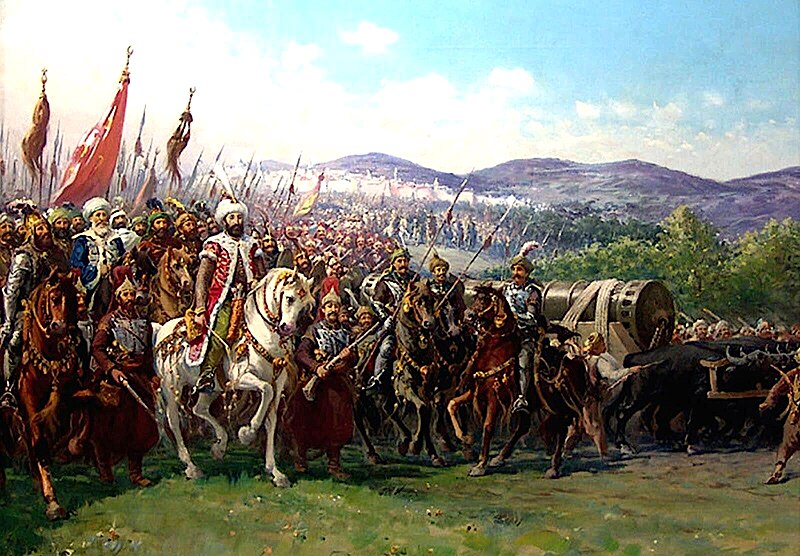
Fall of Constantinople by Mehmed II
Turkey
Military
Ottoman Empire
4 min read
Updated By: History Editorial Network (HEN)
Published:
Updated:
The Fall of Constantinople was a pivotal event in world history, marking the end of the Byzantine Empire and the rise of the Ottoman Empire as a dominant power in the region. Under the leadership of Sultan Mehmed II, the Ottomans launched a well-planned siege against the city, which had been a significant center of trade, culture, and religion for centuries. The Byzantine defenses, although formidable, were ultimately unable to withstand the advanced military tactics and artillery employed by the Ottomans. Mehmed II reorganized the Ottoman military, incorporating new technologies such as large cannons, which played a crucial role in breaching the city's walls. The successful conquest of Constantinople not only solidified Mehmed II's reputation as a conqueror but also transformed the city into the new capital of the Ottoman Empire, which would expand significantly in the following centuries.
The impact of the Fall of Constantinople extended beyond the immediate territorial changes. It marked a significant shift in trade routes, as the Ottomans controlled key passages between Europe and Asia. This control facilitated the spread of Islamic culture and influence throughout the region. Additionally, the fall prompted many scholars and artists to flee to Western Europe, bringing with them classical knowledge and ideas that would contribute to the Renaissance. The event also instigated a series of conflicts between the Ottoman Empire and various European powers, leading to centuries of geopolitical tension. The legacy of the Fall of Constantinople is evident in the cultural and religious landscape of modern-day Turkey and the broader region, as it set the stage for the Ottoman Empire's role in shaping European and Middle Eastern history.
#mooflife
#MomentOfLife
#FallOfConstantinople
#MehmedIi
#OttomanEmpire
#ByzantineEmpire
#HistoricalEvents
Primary Reference
Fall of Constantinople

Explore the Life Moments of
 AI Twin