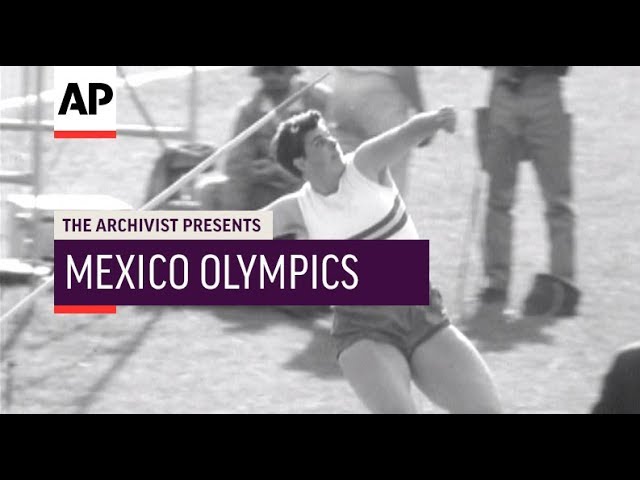
Mexico, Mexico City Olympics from 12-Oct-1968 to 27-Oct-1968
Greece
Sport
10 min read
Updated By: History Editorial Network (HEN)
Published:
The 1968 Summer Olympics, held in Mexico City, Mexico, from October 12 to October 27, 1968, were officially known as the Games of the XIX Olympiad. These Games were significant for several reasons, including the high altitude of the host city, the introduction of new events, and the iconic moments of athletic excellence and political expression that defined the era.
Mexico City was chosen as the host city in 1963, making it the first city in Latin America to host the Olympics. The decision was met with great enthusiasm by the Mexican population, and the city prepared extensively for the Games. New facilities were constructed, including the Estadio Olímpico Universitario for track and field events and the Alberca Olímpica Francisco Márquez for swimming and diving events.
A total of 5,516 athletes from 112 countries participated in the 1968 Mexico City Olympics, competing in 172 events across 18 sports. These Games saw the debut of several new countries, including British Honduras (now Belize) and El Salvador, reflecting the growing global reach of the Olympic movement.
The opening ceremony on October 12, 1968, was a grand and meticulously organized event, attended by President Gustavo Díaz Ordaz of Mexico and a large crowd of spectators. The ceremony featured a parade of athletes from all participating nations, followed by the raising of the Olympic flag and the playing of the Olympic Anthem. President Díaz Ordaz declared the Games open, emphasizing the spirit of international friendship and competition.
One of the most notable aspects of the 1968 Mexico City Olympics was the high altitude of the host city, which is located at 2,240 meters (7,350 feet) above sea level. The thin air at this altitude had a significant impact on the athletes, particularly in endurance events. However, it also led to some remarkable performances in sprinting and jumping events, where the reduced air resistance allowed athletes to achieve exceptional results.
In athletics, Bob Beamon of the United States achieved one of the most iconic moments in Olympic history by setting a new world record in the long jump. Beamon's leap of 8.90 meters (29 feet, 2.5 inches) shattered the previous record by a remarkable 55 centimeters (21.75 inches) and stood as the world record for 23 years. His "leap of the century" became a symbol of the extraordinary achievements possible at the Olympics.
Another standout performance in athletics came from Tommie Smith and John Carlos of the United States, who won gold and bronze medals, respectively, in the 200 meters. During the medal ceremony, Smith and Carlos raised their fists in a Black Power salute, drawing attention to racial injustice and inequality in the United States. Their gesture became an enduring symbol of the intersection of sports and social activism.
The marathon was another highlight of the 1968 Mexico City Olympics. The race was held on a challenging course that started and finished at the Estadio Olímpico Universitario. Mamo Wolde of Ethiopia won the gold medal, continuing the legacy of his compatriot Abebe Bikila, who had won the marathon at the 1960 and 1964 Olympics. Wolde's victory was a testament to his endurance and determination.
Swimming events were held at the Alberca Olímpica Francisco Márquez, a newly constructed facility in Mexico City. Debbie Meyer of the United States emerged as the standout swimmer, winning three gold medals in the 200 meters freestyle, 400 meters freestyle, and 800 meters freestyle. Her teammate, Mark Spitz, also performed exceptionally well, winning two gold medals in the 100 meters butterfly and 4x100 meters freestyle relay.
The 1968 Mexico City Olympics also saw the debut of several new sports and events, including volleyball and judo. The Soviet Union won the gold medal in men's volleyball, defeating Japan in the final. The inclusion of these sports reflected the growing diversity and popularity of the Olympic program.
Gymnastics competitions at the 1968 Mexico City Olympics featured both individual and team events. The Soviet team dominated the gymnastics events, winning gold in the men's team all-around and several individual events. Natalia Kuchinskaya of the Soviet Union won three gold medals, showcasing her versatility and skill in multiple disciplines.
One of the unique aspects of the 1968 Mexico City Olympics was the use of electronic timing and photo-finish technology, which enhanced the accuracy and excitement of the competitions. The Games were also the first to be broadcast in color, providing viewers around the world with vibrant and detailed images of the events.
Equestrian events at the 1968 Mexico City Olympics included dressage, eventing, and show jumping. The German team excelled in these events, with Josef Neckermann winning gold in individual dressage and the German team securing victory in the team dressage event.
The closing ceremony on October 27, 1968, marked the end of a highly successful and well-organized Olympic Games. Medals were awarded to the winners, and the athletes bid farewell to Mexico City, leaving behind a legacy of excellence and innovation. The success of the Mexico City Games demonstrated the potential of the Olympics to unite nations and celebrate athletic achievement on a global scale.
The legacy of the 1968 Mexico City Olympics is reflected in the continued growth and development of the Olympic movement. The Games showcased the diversity and excitement of sports, setting new standards for future competitions. The success of the Mexico City Games also highlighted the importance of proper organization and the need for international cooperation in hosting the Olympics.
#MomentsOfLife #MoofLife_Moment #MoofLife #1968Olympics #MexicoCity #TommieSmith #JohnCarlos #FosburyFlop #OlympicHistory
Primary Reference
Mexico City 1968 - Athletes, Medals & Results

Explore the Life Moments of
 AI Twin