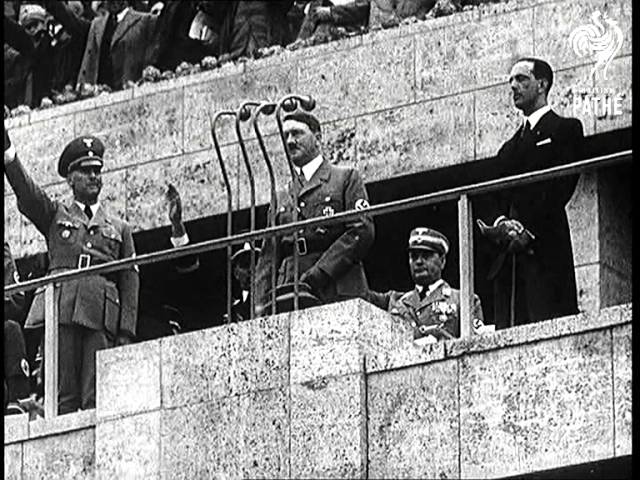
Germany, Berlin Olympics from 1-Aug-1936 to 16-Aug-1936
Greece
Sport
10 min read
Updated By: History Editorial Network (HEN)
Published:
The 1936 Summer Olympics, held in Berlin, Germany, from August 1 to August 16, 1936, were officially known as the Games of the XI Olympiad. These Games were marked by the political context of the time, with the Nazi regime using the event as a platform for propaganda. Despite this, the 1936 Berlin Olympics were notable for their excellent organization, technological innovations, and memorable athletic performances.
Berlin was selected as the host city for the 1936 Olympics in 1931, before the Nazi regime came to power. The decision to host the Games in Germany was intended to promote international peace and friendship. However, the Nazi regime, led by Adolf Hitler, saw the Olympics as an opportunity to showcase Germany's resurgence and promote its ideology.
A total of 3,963 athletes from 49 countries participated in the 1936 Berlin Olympics, competing in 129 events across 19 sports. The Games were held at the newly constructed Reichssportfeld, which included the Olympic Stadium with a seating capacity of 100,000 spectators, and other state-of-the-art facilities.
The opening ceremony on August 1, 1936, was a grand and meticulously organized event, attended by Adolf Hitler and other high-ranking Nazi officials. The ceremony featured a parade of athletes from all participating nations, followed by the raising of the Olympic flag and the playing of the Olympic Anthem. For the first time, the Olympic torch relay, introduced at the 1932 Los Angeles Olympics, was used to carry the flame from Olympia, Greece, to Berlin, symbolizing the connection between the ancient and modern Games.
One of the most notable aspects of the 1936 Berlin Olympics was the introduction of several technological innovations. The Games were the first to be broadcast on television, with live coverage reaching audiences in Berlin and surrounding areas. Additionally, the use of electronic timing and photo-finish technology provided greater accuracy and fairness in the results.
In athletics, the 1936 Berlin Olympics saw several remarkable performances. Jesse Owens of the United States emerged as the standout athlete, winning four gold medals in the 100 meters, 200 meters, long jump, and 4x100 meters relay. Owens' achievements were particularly significant given the racial context of the time, and his success challenged the Nazi regime's ideology of racial superiority. Owens' performances captivated the audience and earned him widespread acclaim and recognition.
The marathon was another highlight of the 1936 Berlin Olympics. The race was held on a challenging course that started and finished at the Olympic Stadium. Sohn Kee-chung of Korea, competing for Japan due to the Japanese occupation of Korea, won the gold medal, completing the race in 2 hours, 29 minutes, and 19 seconds. The marathon showcased the endurance and determination of the athletes, highlighting the physical and mental challenges of long-distance running.
Swimming events were held at the Olympic Swimming Stadium, a newly constructed facility in the Reichssportfeld. Rie Mastenbroek of the Netherlands emerged as the standout swimmer, winning three gold medals in the 100 meters freestyle, 400 meters freestyle, and 4x100 meters freestyle relay, and a silver medal in the 100 meters backstroke. Her teammate, Hendrika "Rie" Mastenbroek, also performed exceptionally well, winning two gold medals and a silver medal.
The 1936 Berlin Olympics also saw the debut of basketball as an official Olympic sport. The tournament featured 23 teams, with the United States emerging as the gold medal winner after defeating Canada in the final. The inclusion of basketball reflected the growing popularity of the sport and its potential as an exciting and competitive Olympic event.
Gymnastics competitions at the 1936 Berlin Olympics featured both individual and team events. The German team dominated the gymnastics events, winning gold in the men's team all-around and several individual events. Konrad Frey of Germany won three gold medals, one silver, and two bronzes, showcasing his versatility and skill in multiple disciplines.
One of the unique aspects of the 1936 Berlin Olympics was the inclusion of art competitions, reflecting the original vision of the Olympic Games as a celebration of both athletic and artistic excellence. Competitions were held in literature, painting, sculpture, architecture, and music, with medals awarded to the best artistic works inspired by sports.
The 1936 Berlin Olympics were not without controversy. The political context and the use of the Games for propaganda purposes cast a shadow over the event. Despite this, the resilience and determination of the athletes, coupled with the enthusiasm of the spectators, ensured the success of the Games.
The closing ceremony on August 16, 1936, marked the end of a highly successful and well-organized Olympic Games. Medals were awarded to the winners, and the athletes bid farewell to Berlin, leaving behind a legacy of excellence and innovation. The success of the Berlin Games demonstrated the potential of the Olympics to unite nations and celebrate athletic achievement on a global scale.
The legacy of the 1936 Berlin Olympics is reflected in the continued growth and development of the Olympic movement. The introduction of television broadcasting, the use of electronic timing, and the increased international participation set new standards for future Games. The 1936 Berlin Olympics also highlighted the importance of separating sports from politics, a lesson that continues to resonate in the Olympic movement.
#MomentsOfLife #MoofLife_Moment #MoofLife #BerlinOlympics #NaziPropaganda #JesseOwens #GeopoliticalTensions #WorldWarII
Primary Reference
1936 Summer Olympics - Wikipedia

Explore the Life Moments of
 AI Twin