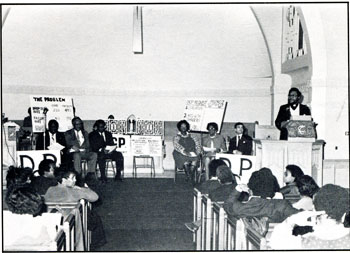
Moved to Chicago to work as a community organizer
Political
Social Justice
10 min read
Updated By: History Editorial Network (HEN)
Published:
In 1985, a 24-year-old Barack Obama moved to Chicago to begin his work as a community organizer, a decision that would profoundly shape his worldview and future political career. For the next three years, from 1985 to 1988, Obama served as the executive director of the Developing Communities Project (DCP) on the South Side of Chicago. This period, which Obama later described as “the best education I ever had,” was crucial in defining his commitment to public service and social justice.
The Decision to Move to Chicago
After graduating from Columbia University in 1983, Obama worked for a few years in New York City, including a stint as a writer and researcher for a business consultancy. However, feeling unfulfilled by the corporate world, Obama sought a role that would allow him to make a direct impact on the lives of ordinary people. This search led him to Chicago, where he was hired by the Developing Communities Project, a faith-based organization focused on improving conditions in the economically distressed neighborhoods of the South Side.
Obama’s move to Chicago was driven by his desire to understand the challenges facing urban communities and to be a part of the efforts to address those challenges. He was drawn to the city’s rich history of political activism and its role in the civil rights movement. Chicago, with its vibrant African American community and complex social issues, was the perfect place for Obama to begin his journey in public service.
Work with the Developing Communities Project
As the executive director of the Developing Communities Project, Obama was tasked with organizing residents in the Roseland neighborhood and surrounding areas to address issues such as unemployment, housing, and education. The organization operated in and around the Altgeld Gardens housing projects, a predominantly African American community facing severe economic hardships.
During his three years with DCP, Obama worked tirelessly to empower residents and build grassroots leadership. He helped to establish several key initiatives that addressed the community’s most pressing needs:
Job Training Program: Understanding that unemployment was one of the most significant challenges facing the South Side community, Obama helped set up a job training program designed to equip residents with the skills needed to secure employment. This initiative aimed to break the cycle of poverty and provide residents with opportunities for economic advancement.
College-Prep Tutoring Program: Education was another critical focus of Obama’s work. He helped develop a college-prep tutoring program to assist young people in the community in preparing for higher education. This program sought to expand opportunities for youth in the South Side, ensuring that they had the academic support needed to pursue college degrees and achieve their potential.
Tenants’ Rights Organization: Obama also played a key role in organizing tenants in the Altgeld Gardens housing projects to advocate for better living conditions. This tenants’ rights organization empowered residents to demand improvements in housing quality and services, challenging the neglect and disinvestment that had long plagued public housing in the area.
Impact and Legacy
Obama’s work as a community organizer in Chicago had a lasting impact on the communities he served, but it also profoundly influenced him personally. These years on the South Side exposed him to the complexities of urban poverty, the challenges of systemic racism, and the power of collective action. He learned firsthand the importance of listening to the voices of those directly affected by social issues and the effectiveness of grassroots organizing in creating meaningful change.
While the challenges were immense, Obama’s efforts were met with some successes. The programs he helped establish provided valuable resources to the community, and his work laid the groundwork for future organizing efforts in the area. More importantly, this experience helped Obama develop a deep understanding of the social and economic forces that shape the lives of disadvantaged communities, an understanding that would inform his later work as a politician.
Obama’s Reflections on His Time as a Community Organizer
Reflecting on his time in Chicago, Obama has often described it as a period of intense learning and growth. He learned how to navigate complex community dynamics, how to bring together diverse groups of people, and how to advocate effectively for change. These lessons would prove invaluable throughout his political career, from his time in the Illinois State Senate to his presidency.
In his memoir Dreams from My Father, Obama writes about the challenges and rewards of community organizing, emphasizing how these years helped him to find his voice and clarify his purpose. He describes the experience as “the best education I ever had,” underscoring how deeply it shaped his approach to leadership and governance.
#MomentsOfLife
Primary Reference
President Barack Obama | Barack Obama Presidential Library
Explore the Life Moments of
 AI Twin