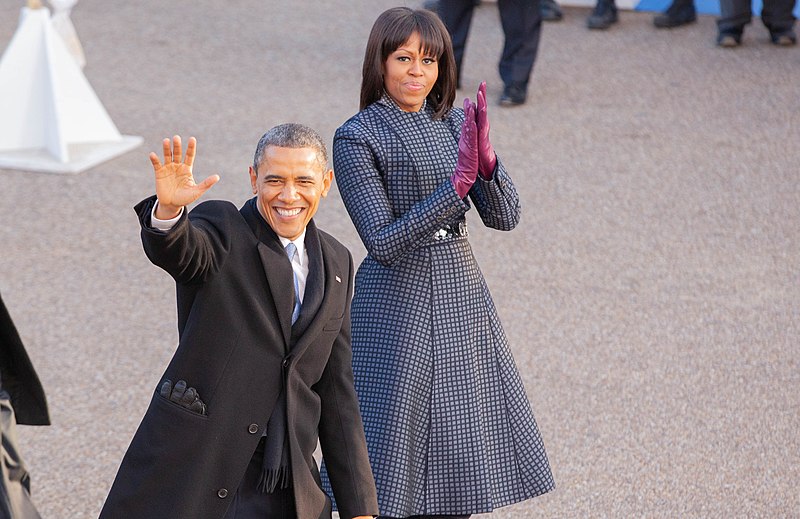
Inaugurated for his second term as the 44th President

Political
10 min read
Updated By: History Editorial Network (HEN)
Published:
On January 21, 2013, Barack Obama was inaugurated for his second term as the 44th President of the United States. The inauguration ceremony, held on the steps of the U.S. Capitol in Washington, D.C., marked the continuation of Obama's presidency following his re-election in November 2012. This event was not only a significant political moment but also a powerful symbol of continuity and the enduring principles of American democracy.
The Historical Context
Barack Obama's second inauguration came at a time of both reflection and anticipation for the nation. His first term had been marked by significant achievements, including the passage of the Affordable Care Act, the killing of Osama bin Laden, and the gradual recovery of the U.S. economy following the Great Recession. However, challenges remained, including ongoing economic concerns, deep political polarization, and the need to address issues such as immigration reform, climate change, and gun control.
The inauguration was particularly notable for taking place on Martin Luther King Jr. Day, adding a layer of historical resonance to the event. The legacy of Dr. King, a civil rights icon who had dreamed of racial equality, was symbolically connected to the re-election of Obama, the first African American president, underscoring the progress that had been made in the struggle for civil rights in the United States.
The Inaugural Ceremony
The official theme of the 2013 inauguration was "Faith in America's Future," reflecting a message of hope and resilience. The theme was chosen to commemorate the 150th anniversary of the Emancipation Proclamation and to emphasize the enduring nature of American democracy.
Oath of Office: As per tradition, the president-elect took the oath of office administered by the Chief Justice of the United States, John Roberts. Due to the fact that January 20, 2013, fell on a Sunday, Obama was sworn in privately at the White House on that day. The public ceremony took place on January 21. With his hand on two Bibles—one that belonged to Abraham Lincoln and the other to Martin Luther King Jr.—Obama recited the oath, reaffirming his commitment to "preserve, protect, and defend the Constitution of the United States."
Inaugural Address: In his second inaugural address, Obama delivered a speech that was both forward-looking and reflective. He spoke of the need for collective action to address the nation's challenges, emphasizing themes of equality, economic opportunity, and the role of government in ensuring a fair and just society. Obama touched on a wide range of issues, including climate change, gay rights, and immigration reform, signaling his priorities for the second term. His address was notable for its clear articulation of a progressive vision for America, rooted in the values of fairness, justice, and the pursuit of the common good.
Attendance and Celebrations: The inauguration drew an estimated crowd of around 1 million people to the National Mall, significantly smaller than the record-setting crowd of 1.8 million at Obama's first inauguration in 2009, but still a substantial and enthusiastic gathering. The day was marked by various celebrations, including the traditional inaugural parade down Pennsylvania Avenue and numerous inaugural balls held throughout Washington, D.C.
Among the notable performances at the ceremony were the Brooklyn Tabernacle Choir, Kelly Clarkson, who sang "My Country, 'Tis of Thee," and Beyoncé, who performed the national anthem. These performances added to the sense of occasion and national pride that characterized the day.
Key Themes and Impact
Equality and Civil Rights: A significant portion of Obama's address was dedicated to the theme of equality, drawing parallels between the struggles of the past and the ongoing efforts to achieve social justice. He made a historic mention of the Stonewall uprising, linking the fight for LGBTQ rights to the broader civil rights movement, and emphasizing that "our journey is not complete until our gay brothers and sisters are treated like anyone else under the law."
Collective Responsibility: Obama’s speech highlighted the importance of unity and collective action in addressing the nation's challenges. He emphasized that while individualism is a valued American trait, there is also a need for shared effort and responsibility, especially in tackling issues like climate change and economic inequality.
Progressive Vision: The inaugural address set the tone for Obama’s second term, with a clear focus on advancing progressive policies. This included advocating for stronger environmental protections, supporting marriage equality, and pushing for comprehensive immigration reform. His speech was seen as a call to action for both the government and the American people to work together in building a more inclusive and prosperous future.
Primary Reference
VIDEO: 2013 Inauguration Ceremony
Explore the Life Moments of
 AI Twin